
For bonds with maturities of about six years or less, the answer is yes. For anything longer, it's no. The 10-year example:
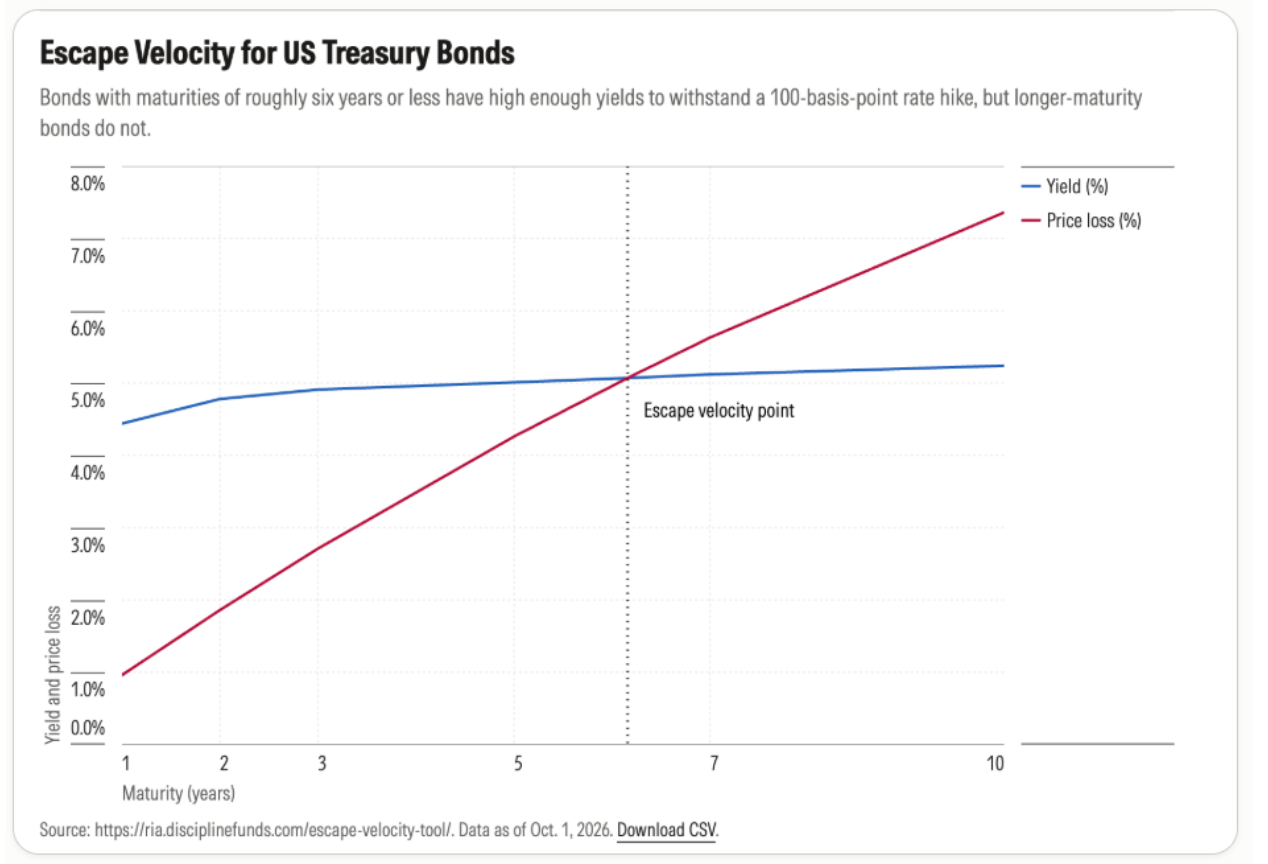
The 10-year Treasury has an effective duration of about 7.75 years. That means a 100 basis point rise in rates would cut its price by roughly 7.75%. The 5.2% yield offsets part of that, but the bond would still show a net loss of about 2%.
The chart makes the pattern visible. The yield line is nearly flat, rising only slightly as maturities lengthen. The price-loss line climbs steeply. They cross at roughly 6.2 years, and everything beyond that point loses more from a 100 basis point rise than it earns in a year of income.
What the chart implies, maturity by maturity
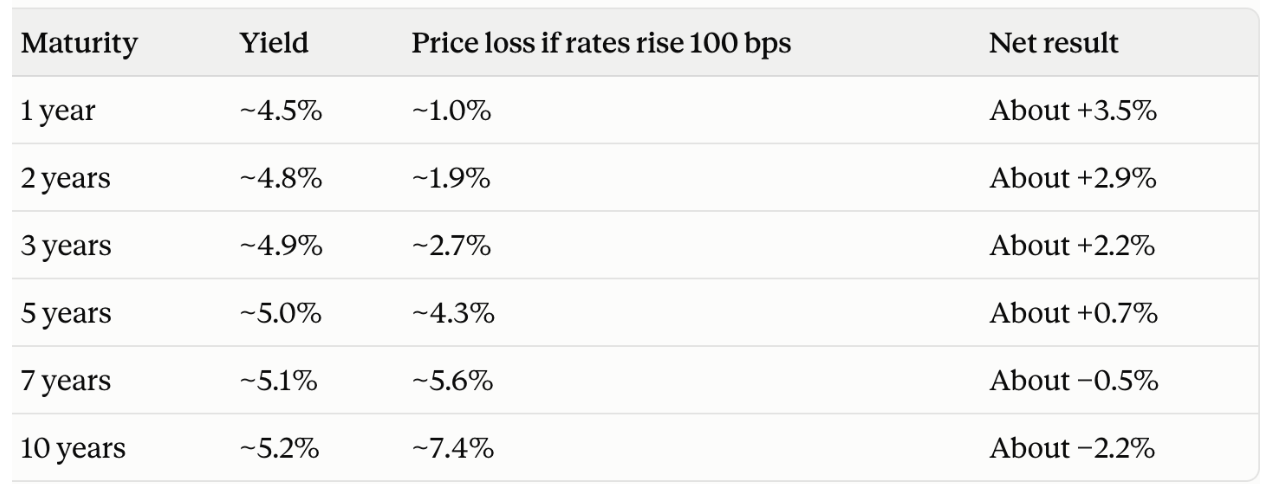
These are approximations read off the chart, so treat them as rough:
The curve isn't paying you for the extra risk
This is the part I'd emphasize. Going from a 2-year bond to a 10-year bond adds only about 0.4 percentage points of yield. In exchange, the potential price loss from a 100 basis point rise roughly quadruples. That's a thin reward for a large increase in risk, and it's the main reason "reaching for yield" in longer maturities deserves a bit more scrutiny.
Why a rate hike isn't the only risk
Many institutional investors expect the Fed's final hike to be just 25 basis points in early December. Against a small hike, longer bonds look less dangerous. But long-term yields don't take their cues only from the Fed. We've seen this all year: the 10-year's worst quarter since 1994, a term premium that rose on a single presidential comment, foreign buying that fell by more than half, and France's yield hitting its highest since 2002. A long bond can lose money even when the Fed does nothing.
The fair counterargument
Duration cuts both ways. We covered the TLT return table earlier, where a 1 percentage point drop in yields produced a gain of about 21.8% over a year, and holding periods matter: a +100 basis point shock that costs 8.1% over one year turned into a +6.6% total return over three years as the income kept compounding. Longer bonds make sense for investors with a long horizon who can wait out the swings, or for anyone who believes yields are close to a peak. The risk is real, but so is the upside.
What this could mean for fixed income investors
- The 2-to-5-year area is the sweet spot. Those maturities still absorb a 100 basis point rise and keep most of the yield.
- Treat long duration as a deliberate bet. If you add it, size it for what you can live with if yields go up another point.
- Build gradually. A ladder or barbell lets you add duration in pieces instead of all at once.
- Match duration to your time horizon. The longer you can hold, the more the income cushion works in your favor.
- Keep dry powder in T-bills. If long yields do spike, you'll want cash to buy with.
The bottom line
The yield cushion on Treasuries is real, but it only stretches so far. Below about six years it covers a 100 basis point rise, and above that it doesn't. With the curve this flat, investors aren't being paid much to take on the extra risk, and that's the part worth remembering before extending maturity.