A Treasury yield approaching 6% would undoubtedly change how investors allocate their portfolios-
And Bank of America’s October 2026 Global Fund Manager Survey reveals this.
Their recent poll reported an average 10-year Treasury yield of 5.9% as the level that would prompt respondents to consider shifting allocations from stocks to bonds.
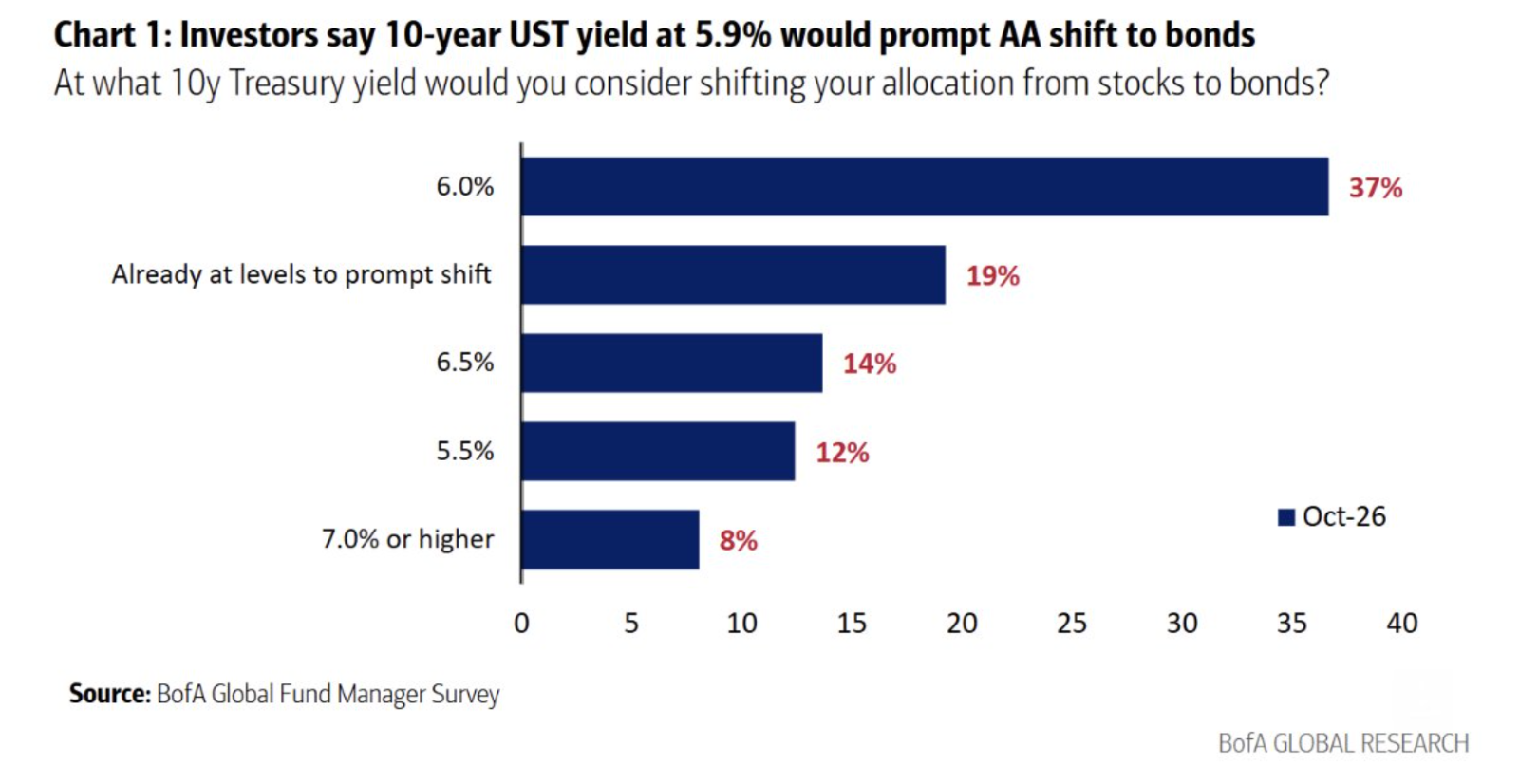
Another 12% selected 5.5%, 14% selected 6.5%, and 8% wanted 7% or higher.
Higher treasury yields are certainly not out of the picture, and while there are a multitude of reasons as to why this is, one of the lesser discussed variables is the substantial rise in corporate issuance.
The image below shows Amazon and Alphabet issuing approximately $70 billion in dollar-equivalent debt since July 1, 2026.
Emerging-market sovereign borrowers issued roughly $45 billion in dollar-denominated external debt over the same period.
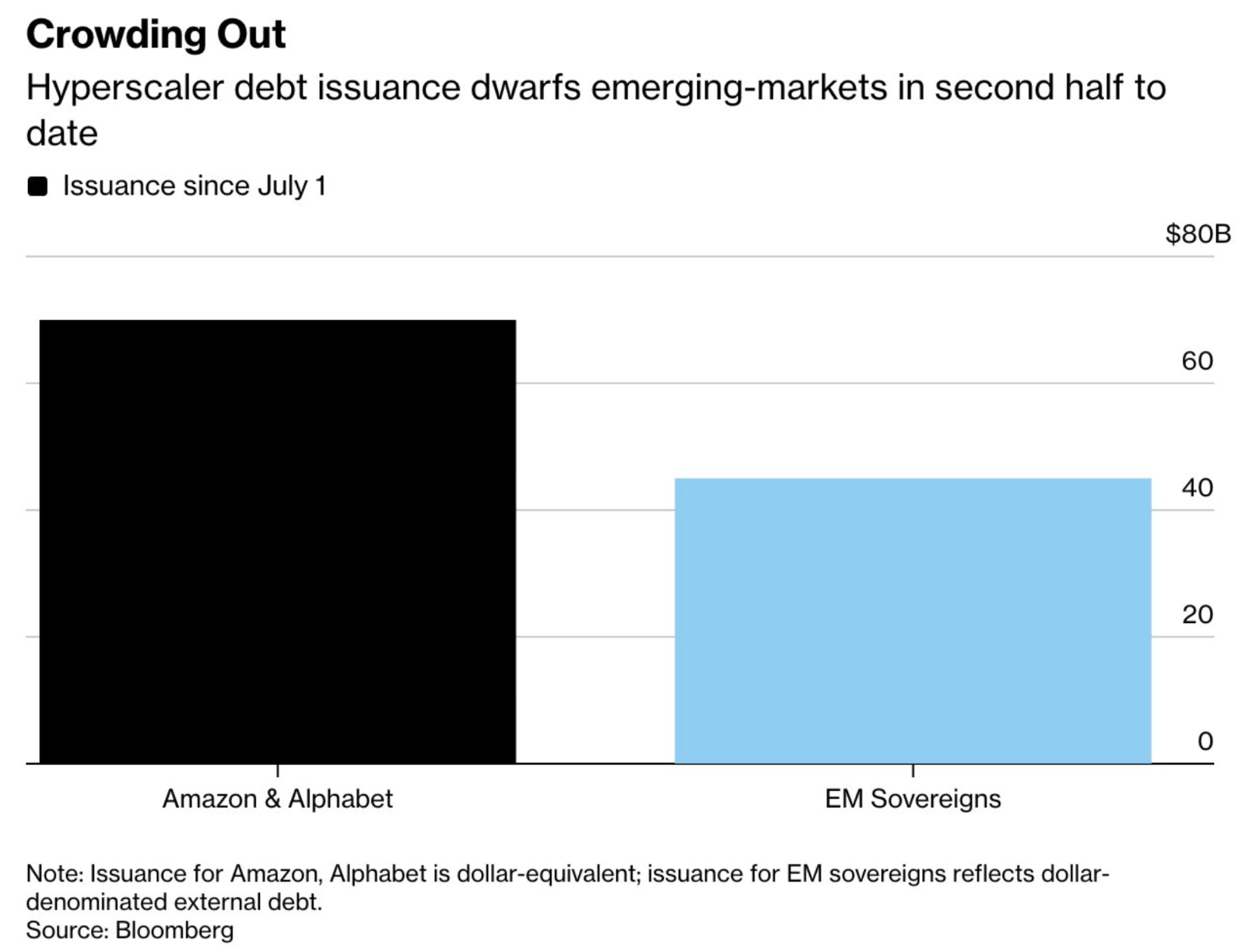
Governments increasingly have to compete with Big Tech for the capital needed to fund their debt.
The natural consequence is that both big tech and emerging market governments are having to compete for the same investor base, pushing yields higher across the board.
Emerging-market dollar bond yields have already risen nearly one percentage point during the second half of 2026.
As more bonds come to market, investors have more choices about where to put their money.
Borrowers will continue to need to offer higher yields to attract that capital, particularly when highly rated technology companies offer an appealing alternative to government debt.
For income investors, this can create opportunities to lock in stronger yields, but it also creates a tradeoff: existing bond prices can fall further if yields continue rising.
A 6% Treasury yield will attract substantial demand, yet the survey measures investor intentions rather than guaranteeing a turning point.