
Every few weeks, the Federal Reserve publishes the Beige Book, a collection of stories from business owners and other contacts in all twelve Fed districts. Highlights from today's meeting follow below.
Growth: slight, and uneven
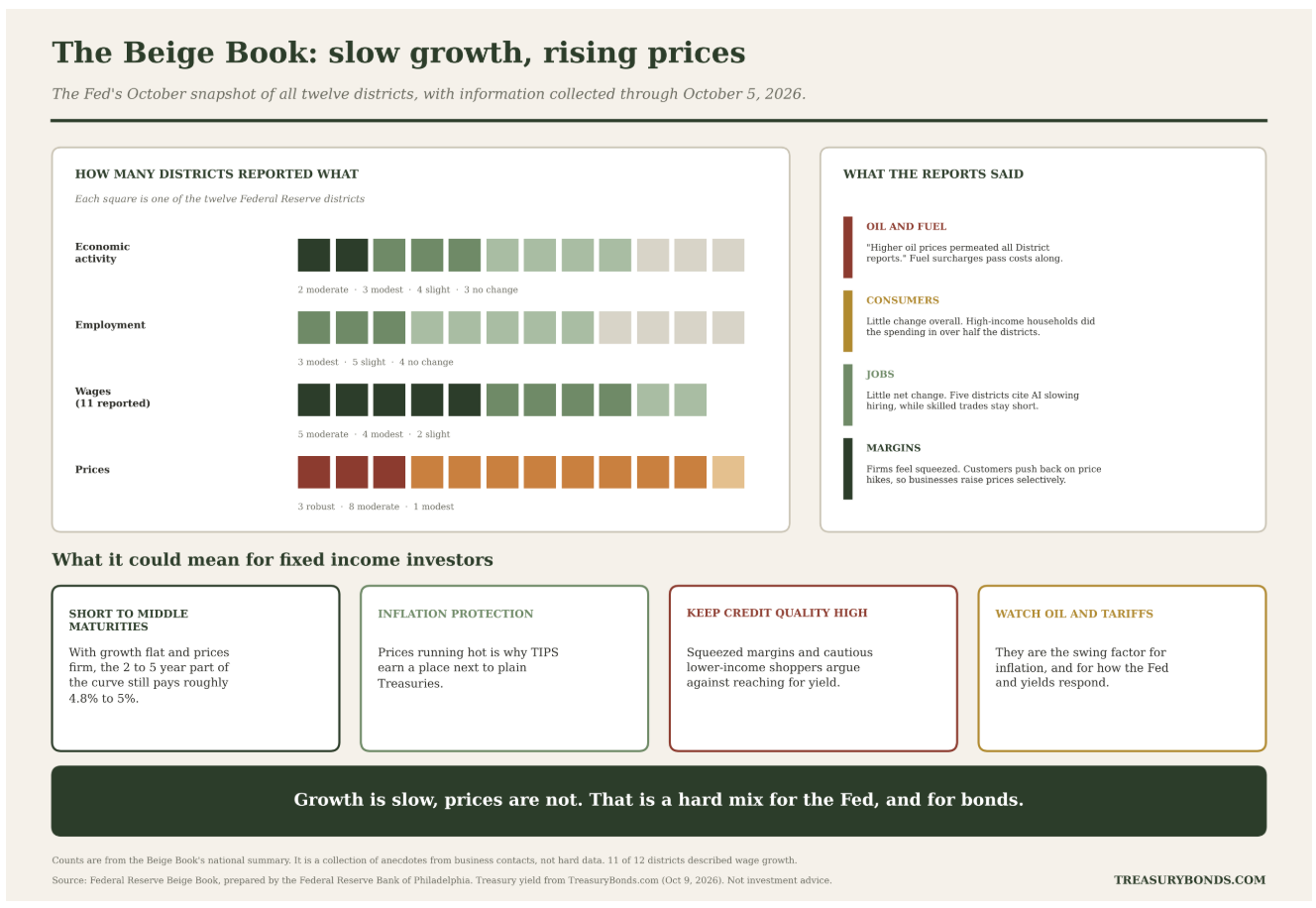
Out of twelve districts, two reported moderate growth, three modest, four slight, and three no real change. Dallas led the way, thanks to broad strength in manufacturing. Another six districts saw modest to moderate manufacturing growth, while the other five saw little or none.
Outside of manufacturing, growth was thin. Consumer spending was little changed in most districts, and in over half of them it was driven by higher-income households. Auto sales were flat to modestly lower in five of the six districts that reported. Dallas noted “some reports of lower-income customers being more cautious with spending.” Tourism kept growing, but Boston, Minneapolis and San Francisco noted fewer Canadian visitors.
Most businesses still expect slight growth ahead, weighted toward manufacturing and held back by uncertainty.
Jobs: little changed
Most districts saw little or no net change in employment. Three saw modest increases, five slight increases, and four no significant change. Workers are generally available, but employers still struggle to find specialized, technical and skilled trades workers. Five districts said some firms were trimming staff through attrition, delaying hiring, or expecting less job creation because they’re investing in AI.
Wages are rising, though. Five districts reported moderate growth, four modest, and two slight. Several noted that inflation is pushing workers to ask for more, and that benefit costs are climbing. In Boston, staffing firms said workers were looking for new jobs because raises lagged inflation.
Prices: where the pressure is
Three districts described price growth as robust, eight as moderate, and one as modest. Four districts said the pace of increases had picked up. In three of the eight “moderate” districts, input cost pressures were intensifying.
Higher oil prices permeated all District reports. Diesel is expensive, and fuel surcharges are passing the cost along the supply chain. Businesses also cited tariffs, other commodities and insurance. Boston flagged a sharp rise in home heating oil prices and worried about winter bills.
Meanwhile, companies that sell directly to consumers say their margins are getting tighter, because customers push back on price hikes. They’re responding with selective increases, targeted incentives and menu changes. Many expect prices to rise further as contracts expire and hedges are renegotiated.
What this could mean for fixed income investors
Slow growth plus firm prices is a hard mix for the Fed. Weak growth would argue for lower rates, and stubborn prices argue against. That tension is what keeps yields from falling easily.
The 2 to 5 year part of the curve still pays roughly 4.8% to 5%. With growth soft and prices firm, I’d still favor short to middle maturities over stretching for the long end.
TIPS earn their place. If inflation stays hot, the inflation adjustment matters, and the Beige Book hints that it might.
Keep credit quality high. Squeezed margins and cautious lower-income shoppers are reasons not to reach for yield in weaker credits.
Watch oil and tariffs. They’re the swing factors for inflation, and for how the Fed and the bond market respond.
Don’t over-read a snapshot. The Beige Book is anecdotes from business contacts, and it isn’t a prediction.
Bottom line
The economy isn’t falling apart, and it isn’t booming. It’s creeping along while the cost of fuel, tariffs and insurance keeps pushing prices up. For bond investors, that points to patience: earn the yield at the short and middle part of the curve, keep some inflation protection, and keep credit quality high.