The 60/40 portfolio is the classic. Sixty percent stocks, forty percent bonds, and a mix that was built to let you sleep at night. So here’s the question: is yours still 60/40?
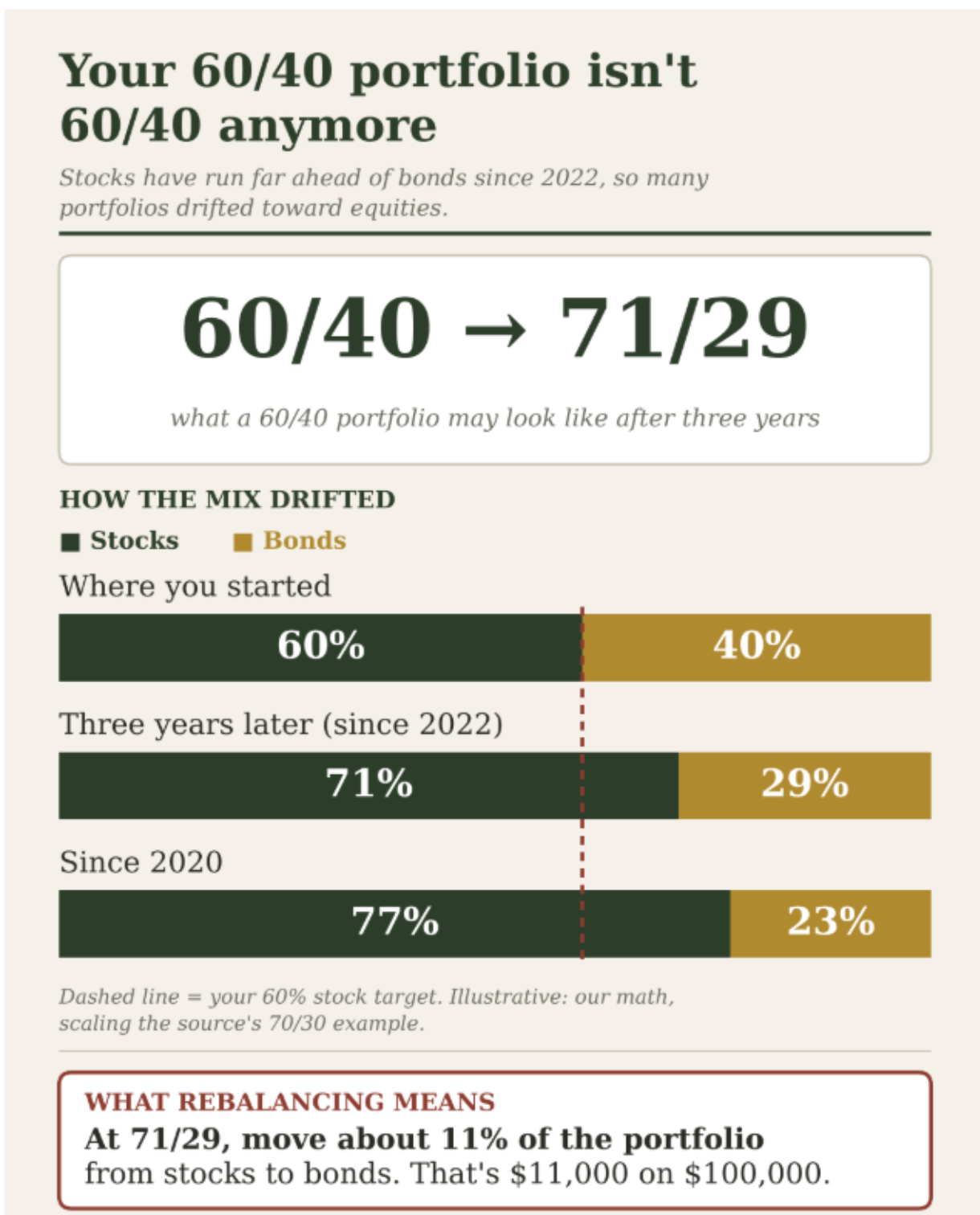
Stocks have trounced bonds since the 2009 market lows. The last few years made it worse. 2023 through 2026 have all brought double-digit equity gains and mediocre bond returns, bookended by 2022’s 13% crash in bonds and this year’s 2.5% selloff.
What drifted
When one side of your portfolio grows faster than the other, your mix changes without you doing anything.
So a 60/40 that’s drifted to 71/29 is carrying about 10 more points of stock risk than you signed up for.
The simple fix
The simplest approach is to rebalance out of equities and back into fixed income at your original weighting. The catch is taxes, so here’s the order I’d think about:
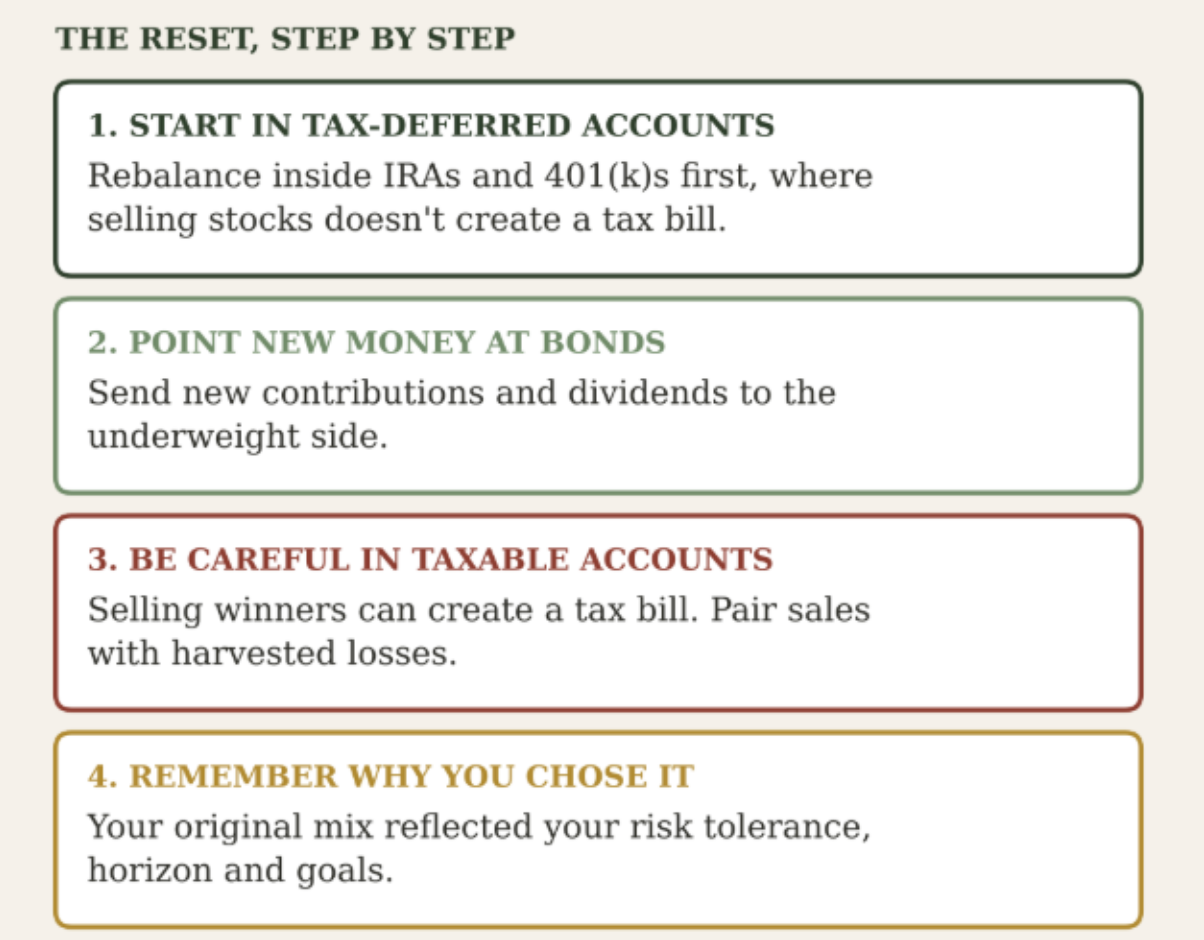
Start in tax-deferred accounts. Rebalance IRAs and 401(k)s first, where selling stocks doesn’t create a tax bill.
Aim new money at the underweight side. Send new contributions and dividends to bonds.
Be careful in taxable accounts. Selling winners can create a tax bill. Pair sales with harvested losses.
Why the 40 matters again
You picked 60/40 for a reason: your risk tolerance, your time horizon and the most direct path to your goals. The 40 was supposed to pay you and give you ballast when stocks wobble.
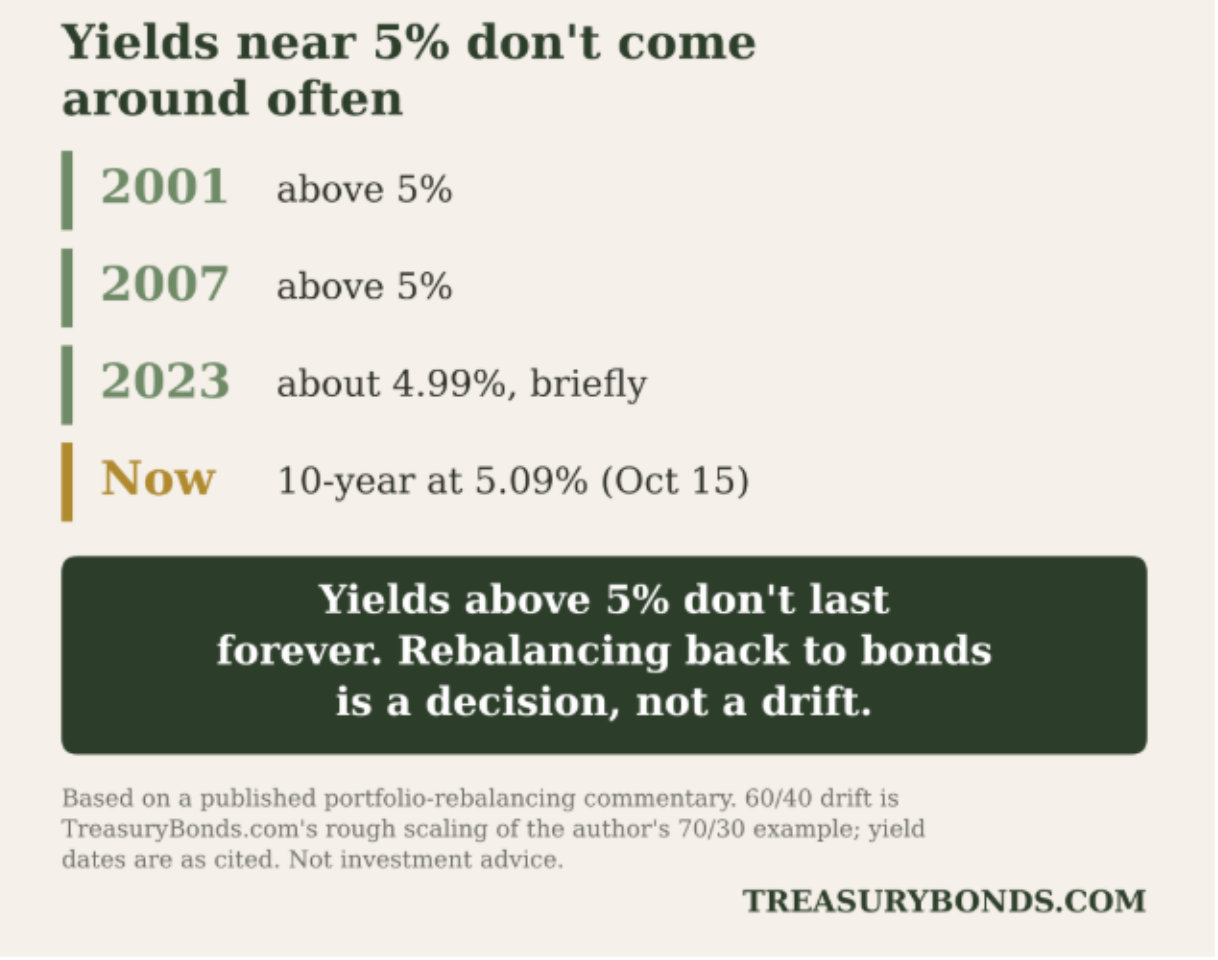
It’s been a long time since investment-grade bonds could do both. Yields were above 5% in 2001, 2007, and briefly in 2023 (around 4.99%). The 10-year is back above 5%, and nobody knows how long it stays.
What this could mean for fixed income investors
Check your real mix. Add up every account. A “60/40” can quietly turn into 70/30 or more.
Rebalance where it’s cheapest. Do it inside IRAs and 401(k)s first.
Use new cash. Contributions and dividends can lean you back toward bonds with no sales.
Build in steps. A ladder lets you add bonds over time instead of guessing the top.
Mind the tax bill. In taxable accounts, harvested losses can offset gains from trimming stocks.
Be honest about risk. If a 30% stock drop would hurt more than you planned for, a drifted portfolio is carrying too much of it.
Bottom line
Yields above 5% don’t last forever. Rebalancing back to bonds is a decision, not a drift. If you don’t take advantage of this opportunity today, you may regret it later.