
Monday the Philadelphia Eagles said Jalen Hurts has blood clots in his lungs. And just moments ago, it was learned that he would miss the rest of the season.
The team says he’s stable and expects a full recovery. But look at how fast the plan changed. A calf injury in Week 4 became a “superficial clot,” which then moved, and now it’s a bigger diagnosis.
This is a life reminder that courses can change fast.
Why this matters for investors
Most of us plan for markets: rates, inflation, the next recession. We spend much less time planning for a diagnosis. But a health shock can hit the family finances in several ways at once:
Income can stop or drop, sometimes with no warning.
Costs go up through deductibles, out-of-pocket maximums, and things insurance doesn’t cover.
Your investments may become the emergency fund, which can force you to sell at the wrong time.
Someone else may have to run everything, often with no access or instructions.
The three biggest things you can do
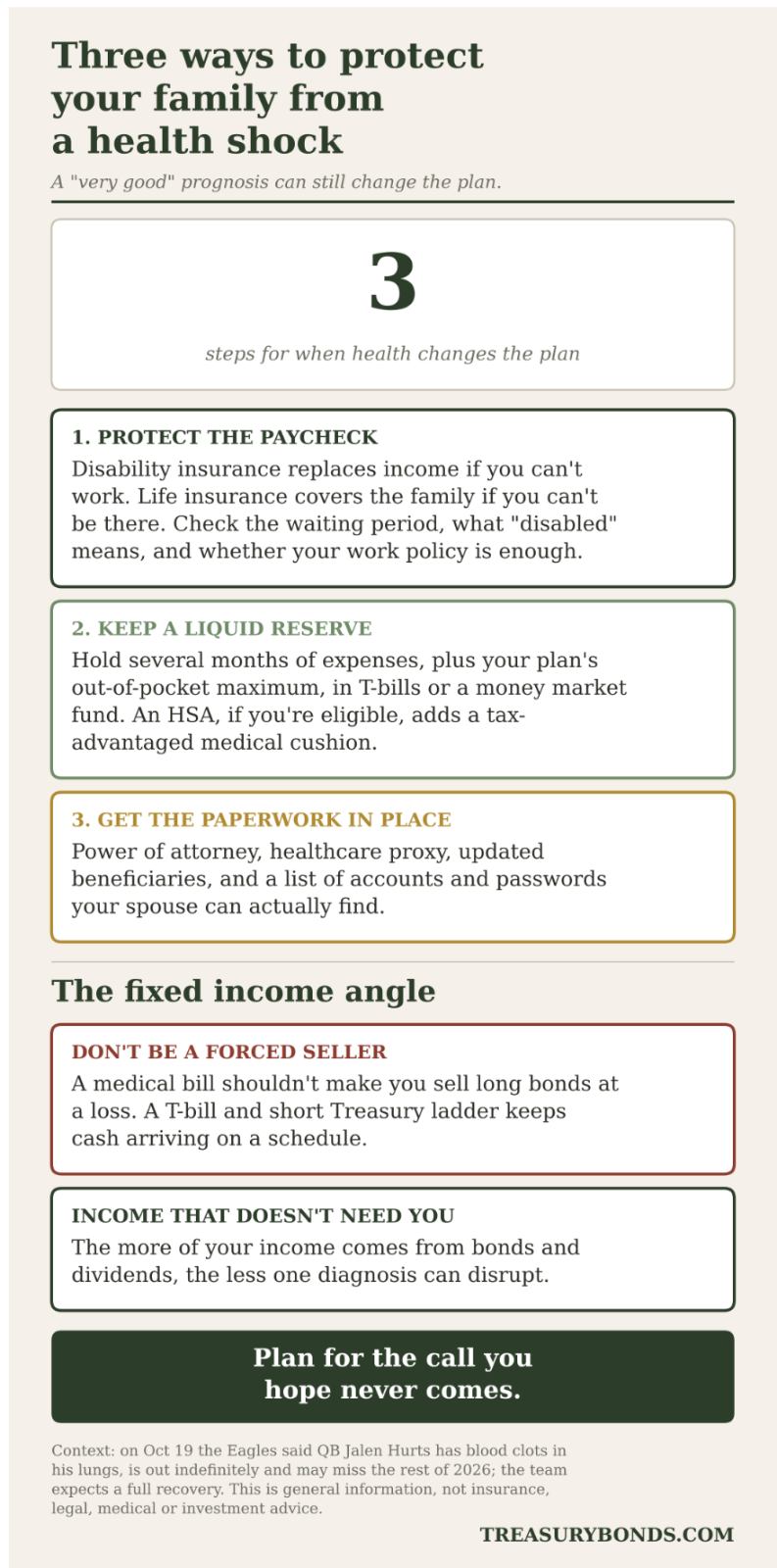
1. Protect the paycheck
Disability insurance replaces part of your income if you can’t work. Check the waiting period before benefits start, how the policy defines “disabled,” and whether your employer’s coverage is enough. Don’t count on Social Security disability as a backup, since it’s hard to qualify for and slow.
Life insurance protects your family if you aren’t there. Term coverage is often the simplest and cheapest way to cover years when others depend on your income.
2. Keep a liquid reserve
Hold several months of expenses, plus your health plan’s out-of-pocket maximum, in T-bills or a money market fund.
If you’re eligible for a health savings account, it can add a tax-advantaged medical cushion.
The goal isn’t return. It’s making sure a medical bill doesn’t force you to sell something else.
3. Get the paperwork and access in place
A durable power of attorney and a healthcare proxy, so someone you trust can act for you.
Updated beneficiaries on retirement accounts, insurance policies and bank accounts.
A simple list of accounts, advisors and where documents are kept, in a place your spouse can actually find.
For fixed income investors
Don’t be a forced seller. If you hold long bonds, especially long zero coupon Treasuries, you don’t want a medical bill to force you to sell when prices are down. A reserve in T-bills prevents that.
Ladder the near term. Short Treasury maturities that come due on a schedule give you cash when you need it.
Build income that doesn’t need you. The more of your income comes from bonds, dividends and other sources, the less one diagnosis can disrupt it.
Match insurance to your gaps, not the other way around. If your portfolio would cover your family’s needs, you may need less.
Bottom line
Nobody plans on a health scare. The families that handle one best usually did three things earlier: insured the income, kept cash available, and made it easy for someone else to step in.