
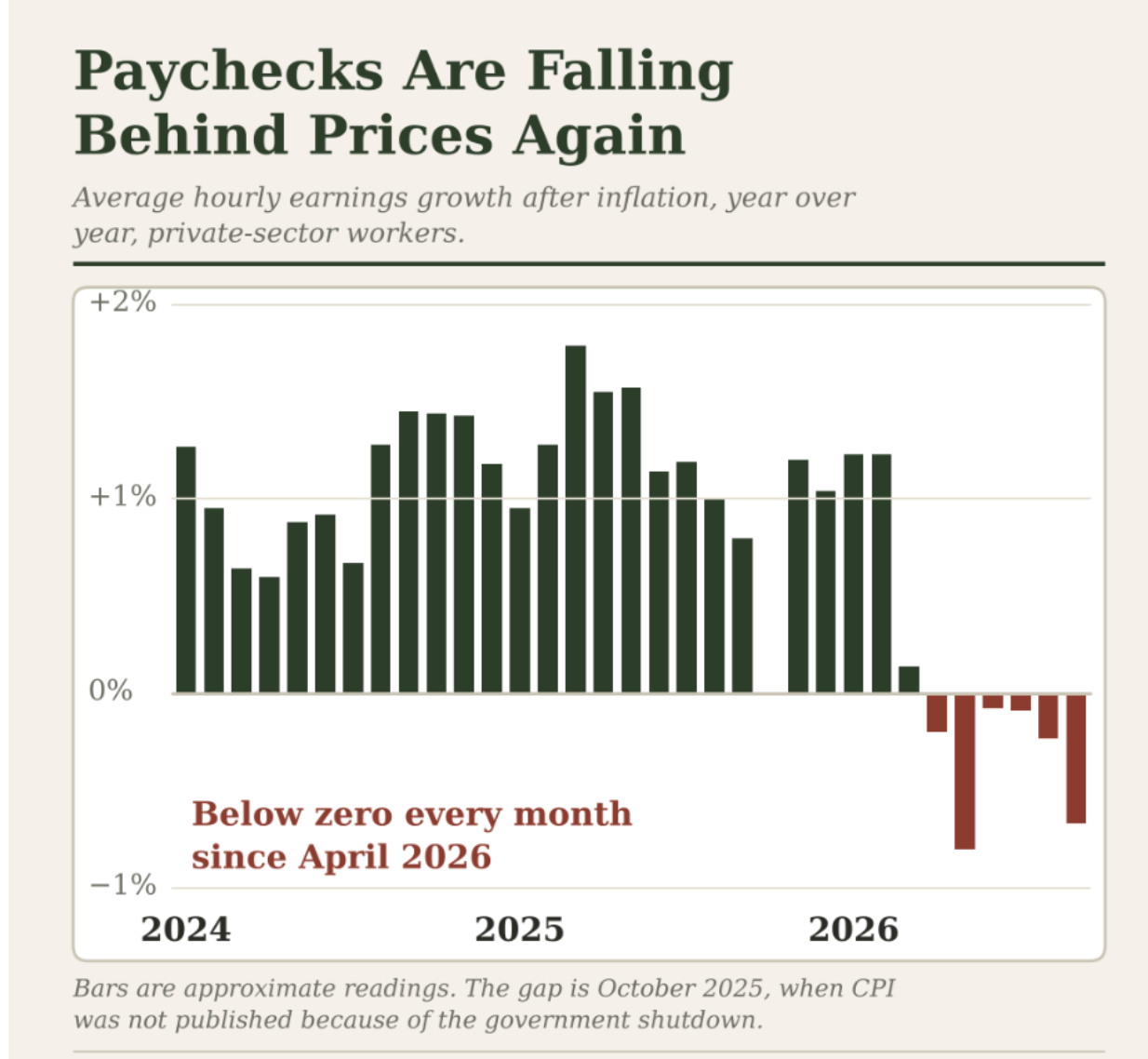
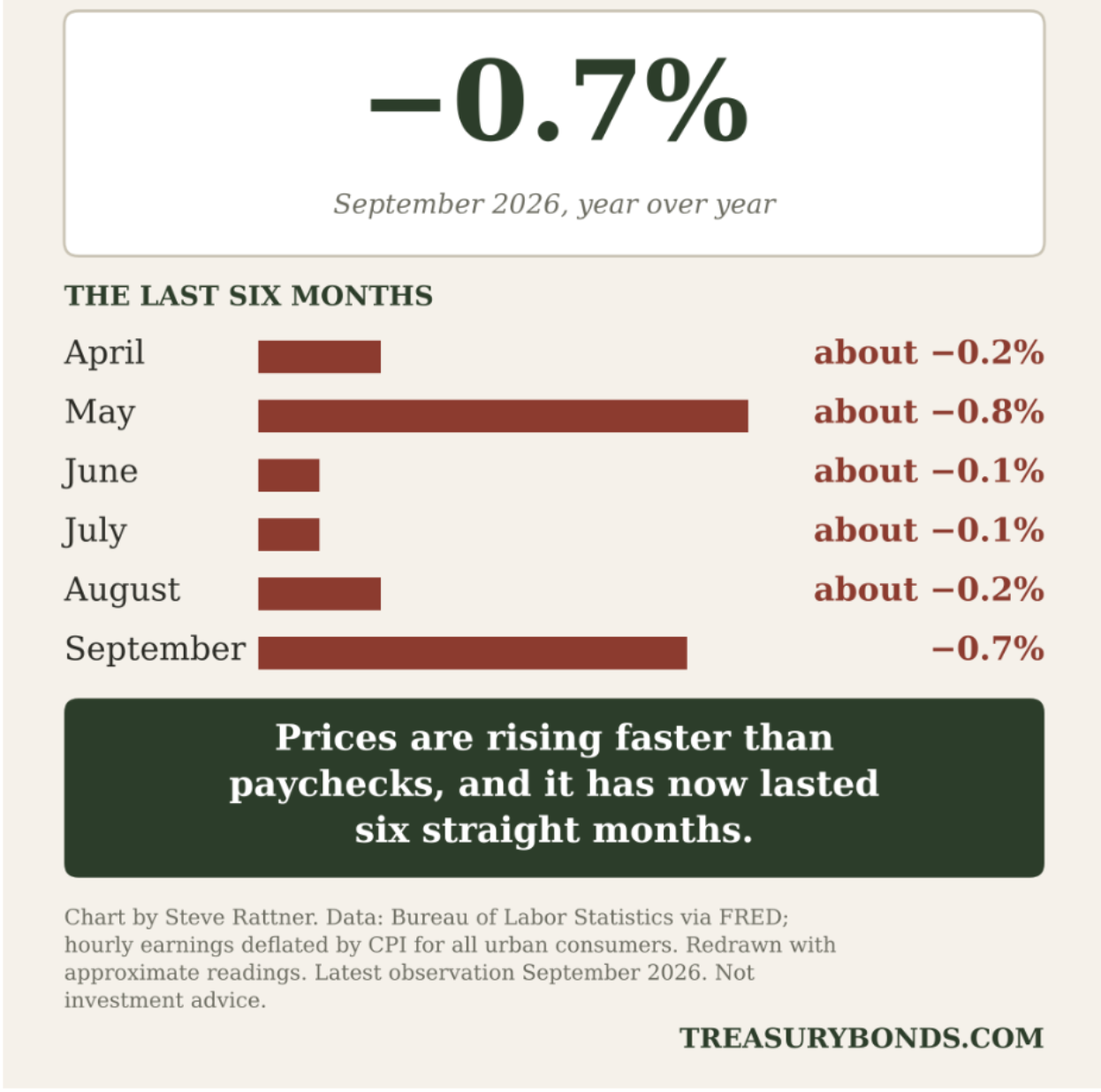
Real earnings have been below zero every month since April 2026, and September came in at −0.7%.
What this chart is telling us
Your raise isn’t keeping up with the cost of living. If prices rise 3% and your pay rises 2.3%, you’re 0.7% poorer than you were a year ago. That’s what the red bars mean.
The 1970s comparison
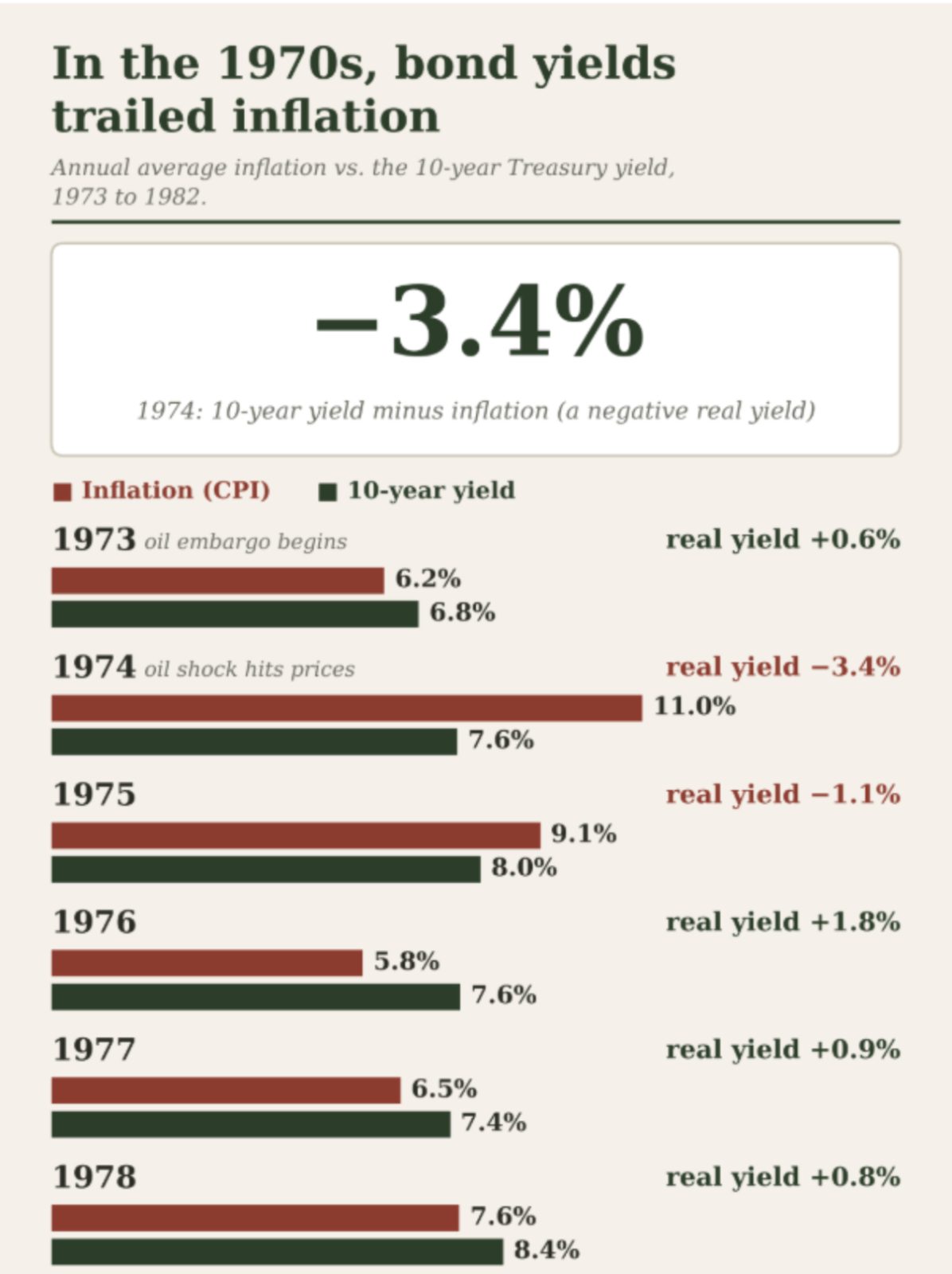
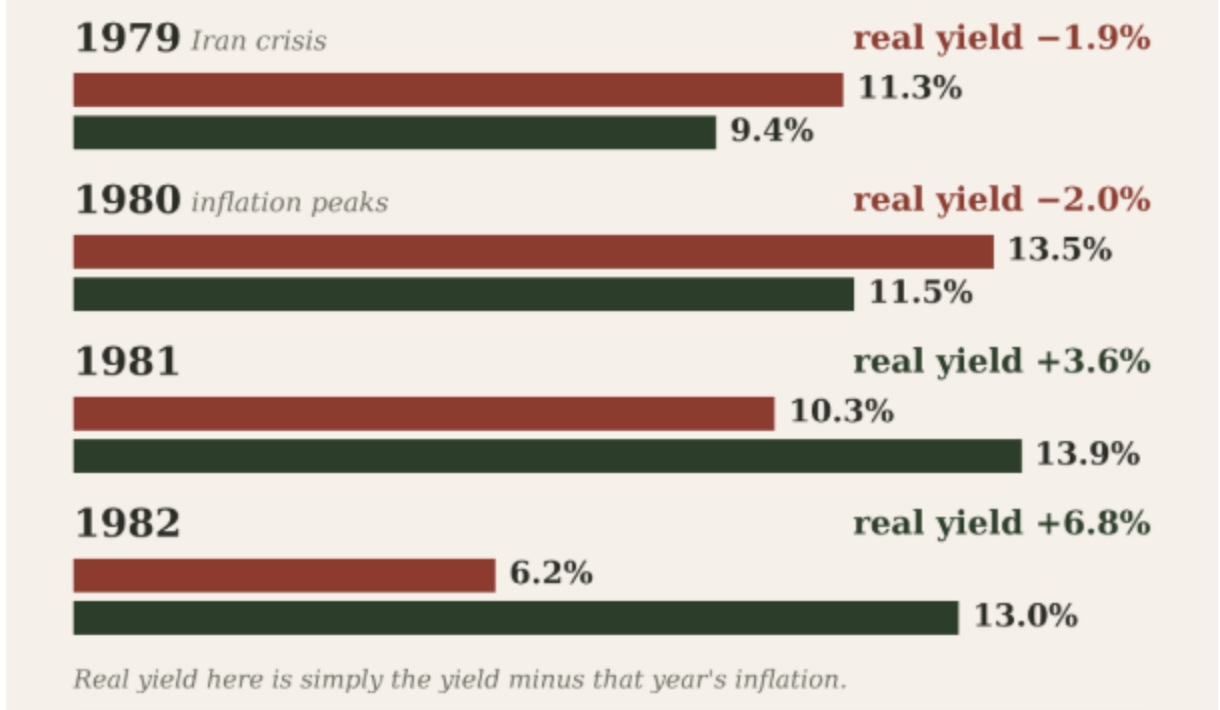
It’s tempting to reach for the 1970s. Oil prices jumped after the 1973 embargo and again around the 1979 Iran crisis. Prices climbed, wages scrambled to keep up, and real paychecks lost ground for years. That’s what made the decade so painful: stagflation, slow growth with high inflation.
What’s similar today:
- An energy shock. Oil is near $100.
- Paychecks losing to prices. Six straight months below zero.
- A central bank in a bind. The Fed has to weigh hot prices against a squeezed consumer.
- Rising yields. The 10-year is at 5.09% and the 30-year at 5.43% as of Thursday’s close.
Where today looks different:
- Inflation is lower. It reached about 12% in 1974 and nearly 15% in 1980. We’re not there. Producer prices did recently run 6.3% year over year, so don’t get complacent.
- A shorter stretch so far. Six months of falling real pay isn’t a decade.
- Different tools. The Fed in the early 1980s took rates near 20% to break inflation. Nobody is talking about that now.
- More ways to protect yourself. TIPS didn’t exist until 1997. In the 1970s, bond investors had no inflation-protected Treasury to buy.
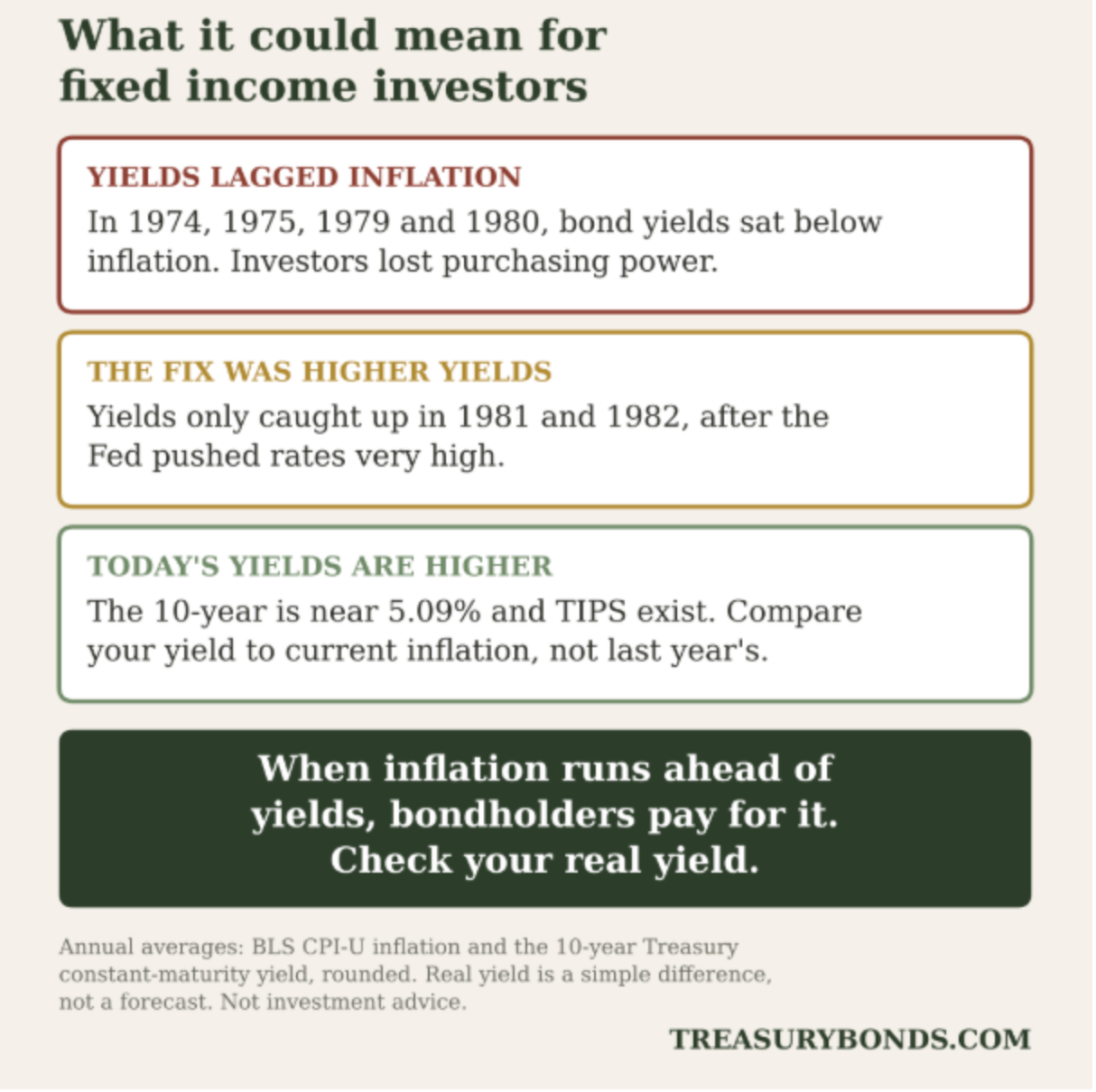
What this could mean for fixed income investors
Long bonds took the pain then. In the 1970s, rising inflation pushed yields up and prices down for years. That’s the risk of holding only long maturities if inflation keeps surprising.
TIPS earn a place. If prices are outrunning paychecks, some inflation protection makes sense.
Weak real pay can slow growth. If households lose purchasing power, spending can cool, and that can pull yields lower. Inflation pushes yields up, a weaker consumer pulls them down. That’s why it’s a hard call.
Keep it short to middle, high quality. Shorter maturities and strong credit help when the outlook is cloudy.
Watch the wage data. Real earnings are a clue to where consumer demand and Fed policy go next.
Bottom line
It isn’t 1974. But prices outrunning paychecks is a pattern worth respecting, and the bond market has a long memory of how it ended last time.