
Sooner or later, every retiree gets the pitch. Someone sits across the table, draws a nice upward-sloping line, and says the word “guaranteed.”
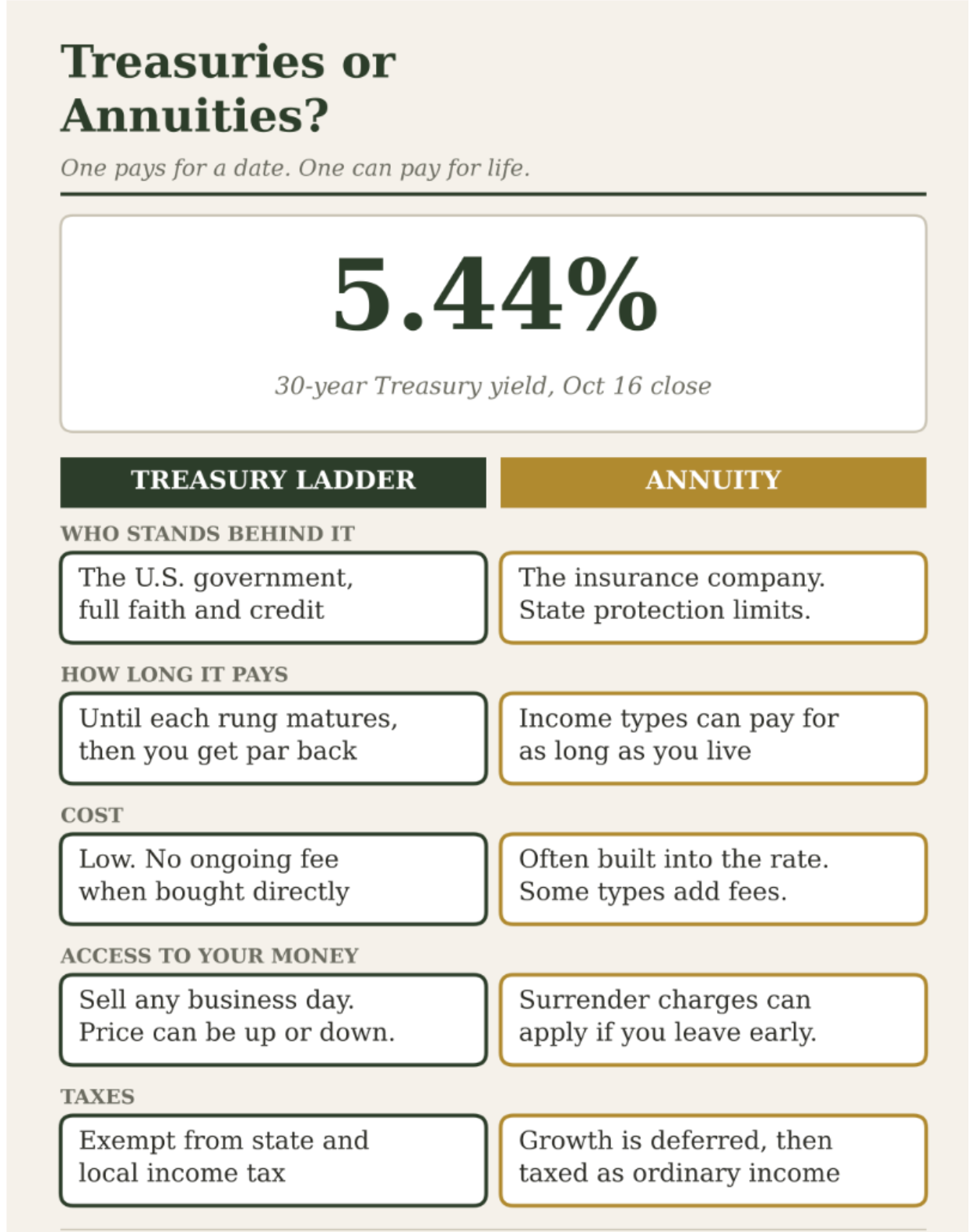
But “guaranteed” by whom, for how long, and at what cost? That’s the whole comparison, and it’s worth walking through, because the 30-year Treasury hovering around 5.44%. That’s a number any annuity has to compete with.
A Treasury ladder is a set of bonds, each with a maturity date. The U.S. government pays interest until each one matures, then hands your principal back. You choose the dates, and you can sell whenever you want, though the price can be up or down.
An annuity is a contract with an insurance company. You hand over money, and the company promises something back: a fixed rate for a set number of years, or, with an income annuity, payments that can last as long as you live.
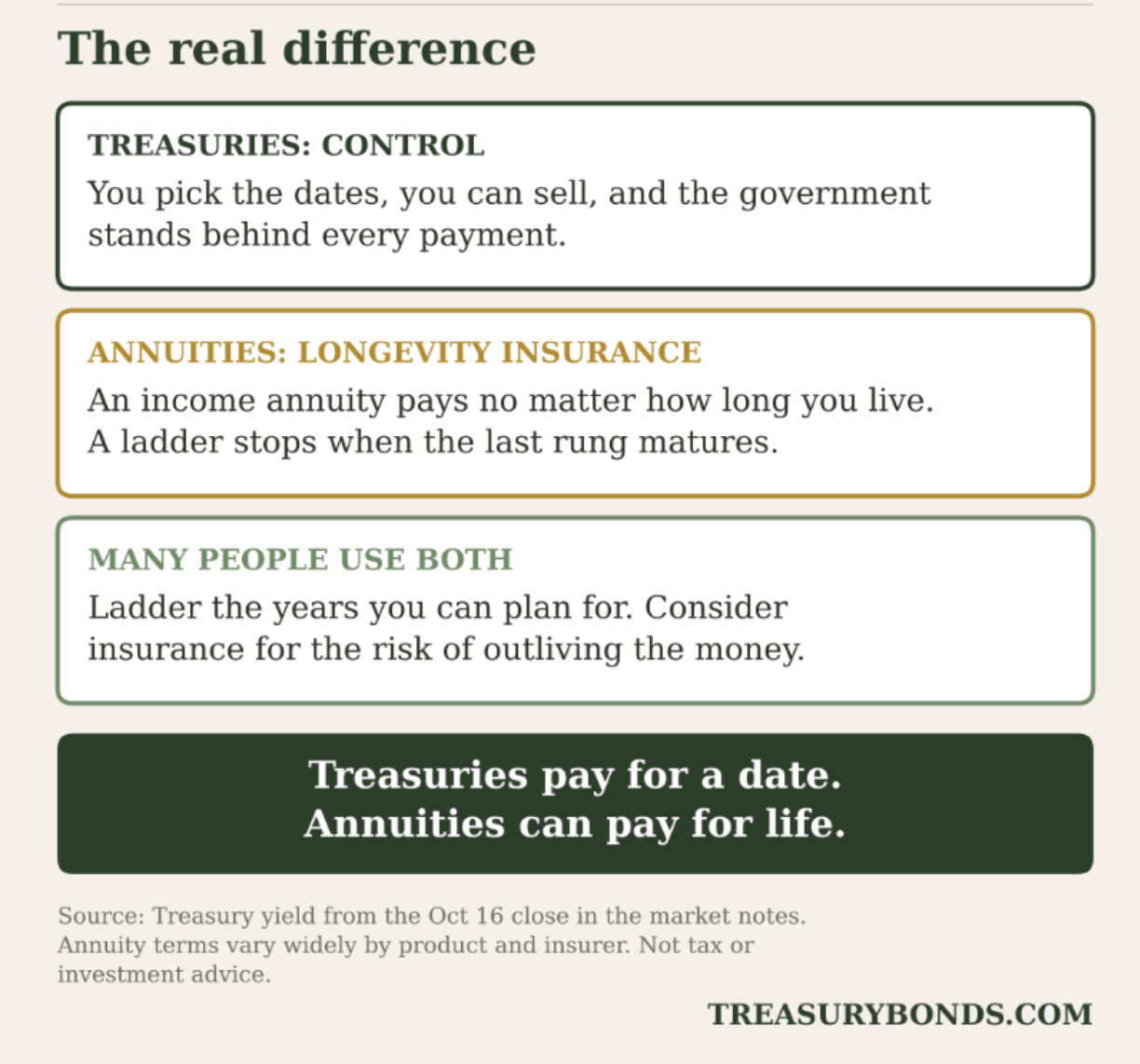
That last part is the real difference. A ladder pays for a date. An income annuity can pay for life.
Where Treasuries win
Who stands behind it. The U.S. government, full faith and credit. An annuity is backed by an insurance company, and the state protection that sits behind it has limits that vary.
Cost. Buying Treasuries directly carries no ongoing fee. Annuity costs are often built into the rate you’re quoted, and some types add fees on top.
Access. You can sell Treasuries on any business day. Many annuities charge surrender fees if you leave early.
State taxes. Treasury interest is exempt from state and local income tax.
Where annuities win
Longevity. If you’re afraid of outliving your money, an income annuity is built for exactly that. A ladder stops when the last rung matures.
Simplicity of the promise. Some people want one check each month that they don’t have to manage. For them, that peace of mind has real value.
Tax deferral. Growth inside a non-qualified annuity isn’t taxed until you take it out, though it’s then taxed as ordinary income.
What this could mean for fixed income investors
- Treat the two as different tools, not rivals. One gives you control, and the other gives you insurance.
- Ladder the years you can plan for, such as the gap before Social Security or the next 10 to 15 years of spending.
- Consider an annuity only for the slice you need to last no matter how long you live.
- Ask for the full cost of any annuity in writing, including surrender charges and rider fees, before comparing it with a Treasury yield.
- Check the insurer’s financial strength and your state’s protection limits.
Bottom line
Treasuries pay for a date, and annuities can pay for life. If you only want a higher check, the Treasury ladder is simpler and cheaper. If you want protection against living a very long time, an annuity may be worth a part of the money. Just don’t pay insurance fees for something you or could have built yourself.