
Wednesday looked like it would be a quiet day for Treasuries but then slid to their lows on a headline out of the Persian Gulf.
Yields rose across the curve.
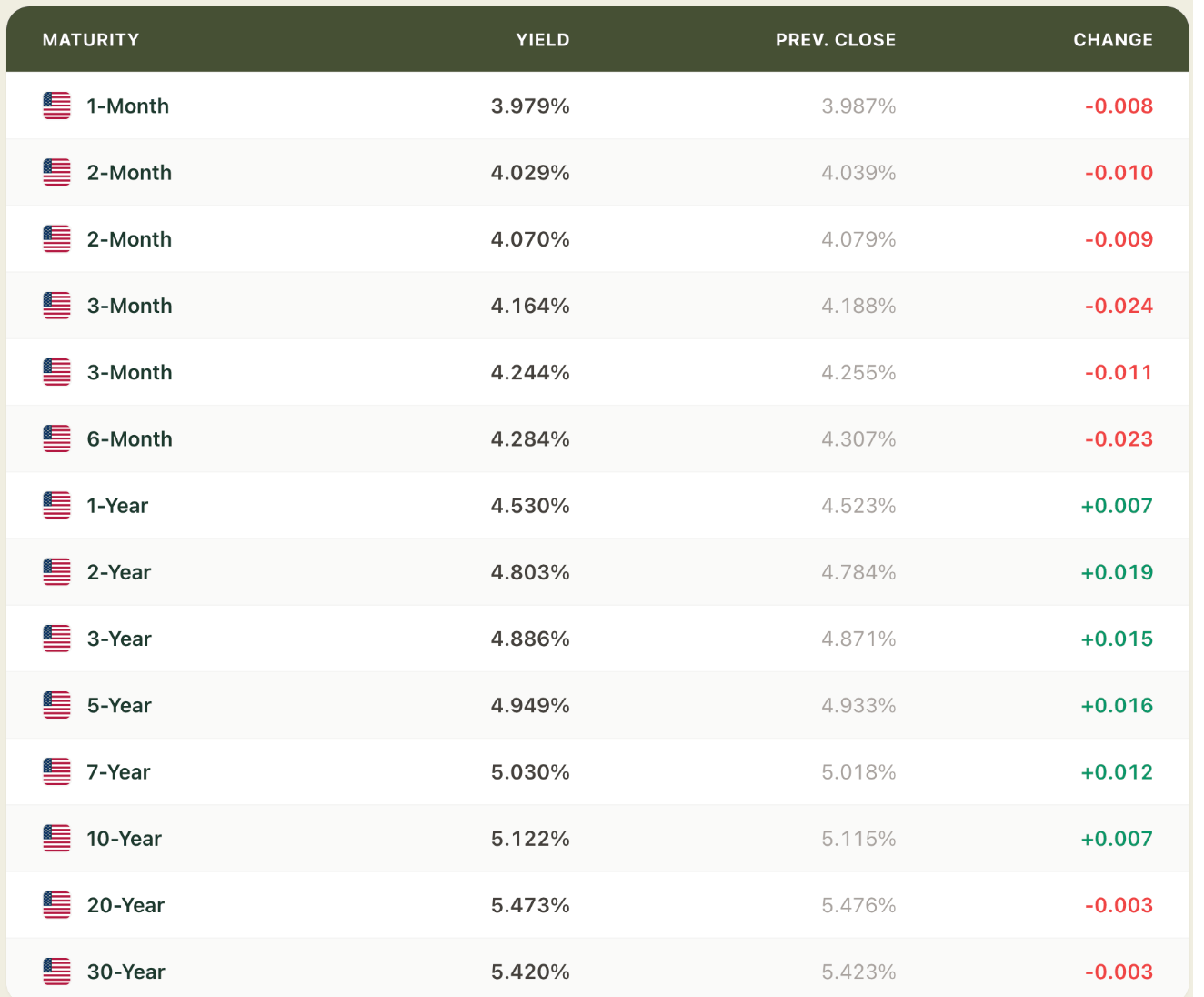
The 2-year gained 3 basis points to 4.82%, the 3-year gained 4 to 4.91%, and the 5-year gained 4 to 4.97%. The 10-year gained 3 to 5.15%, and the 30-year gained 1 to 5.44%.
The late move came after Reuters reported that the State Department will order certain personnel to leave embassies in Persian Gulf countries.
Traders read that as a sign of possible stepped-up military action against Iran.
Oil rallied modestly and settled just above $97 a barrel. The dollar index rose 0.1% to 101.83.
The 20-year auction was a mixed bag
The Treasury reopened $13 billion of 20-year bonds in the afternoon, and the results were mixed.
High yield: 5.469%, versus an average of 4.921% for the prior 12 auctions
Bid-to-cover: 2.73, versus 2.63 on average, so demand was a bit stronger than usual
Indirect bid (foreign and large institutional buyers): 58.2%, versus 64.1%, which is lower
Direct bid: 31.6%, versus 24.4%, which is higher
There were bids, but foreign and institutional demand was thinner.
Long bonds held their small gains through the auction, then gave them up when the Iran headline hit.
Oil near $97 is a problem for bonds because energy prices feed into inflation, and inflation is what the Fed is fighting.
Add a possible military escalation and bond buyers who might have bought a dip stand aside.
The Fed meets next week, October 27 to 28. Markets expect a hold, but nothing today made that decision any easier.

The rest of the world is feeling inflation
U.K. inflation rose to 3.5% year over year (expected 3.4%), with input prices up 8.3%.
Australia’s central bank governor acknowledged that the inflation outlook has worsened since August.
A former Bank of Japan executive director said quarterly rate hikes there are likely to continue.
South Korea’s exports jumped 105.4% in the first 20 days of October, with chip exports up 222.5%.
Housing and energy data
Mortgage applications fell 5.3% for the week after falling 2.7% the week before.
Purchase applications dropped 7.3% and refinancings 2.0%. With rates this high, it’s no surprise.
Crude inventories fell 3.06 million barrels after an 8.56 million drop a week ago, which also supports oil prices.
What this could mean for fixed income investors
Yields near 5% on the 5-year, 10-year and 30-year are still available. Each day like this offers a chance to buy at a slightly higher yield.
The 20-year now yields more than the 30-year (5.469% at auction versus 5.44% in the market).
Headline risk cuts both ways. If tensions escalate, oil could push yields higher. If they calm down, yields could fall quickly. Buying in pieces instead of all at once removes the need to guess.
Weak mortgage demand is a slow-moving signal. It tells you rates are slowing the economy, which could eventually help bonds.
Watch the Fed meeting. A hold is expected. Any change in tone about hiking again could move the front end.
Bottom line
The tone is still cautious. Oil near $97, a soft showing from foreign buyers at the auction, and Middle East headlines all point the same way. Long yields near 5.15% to 5.44% are attractive, and I would keep building positions in steps instead of waiting for a perfect time.