
Your bank is paying you a nice rate right now. Enjoy it, because the bank has the right to change it tomorrow.
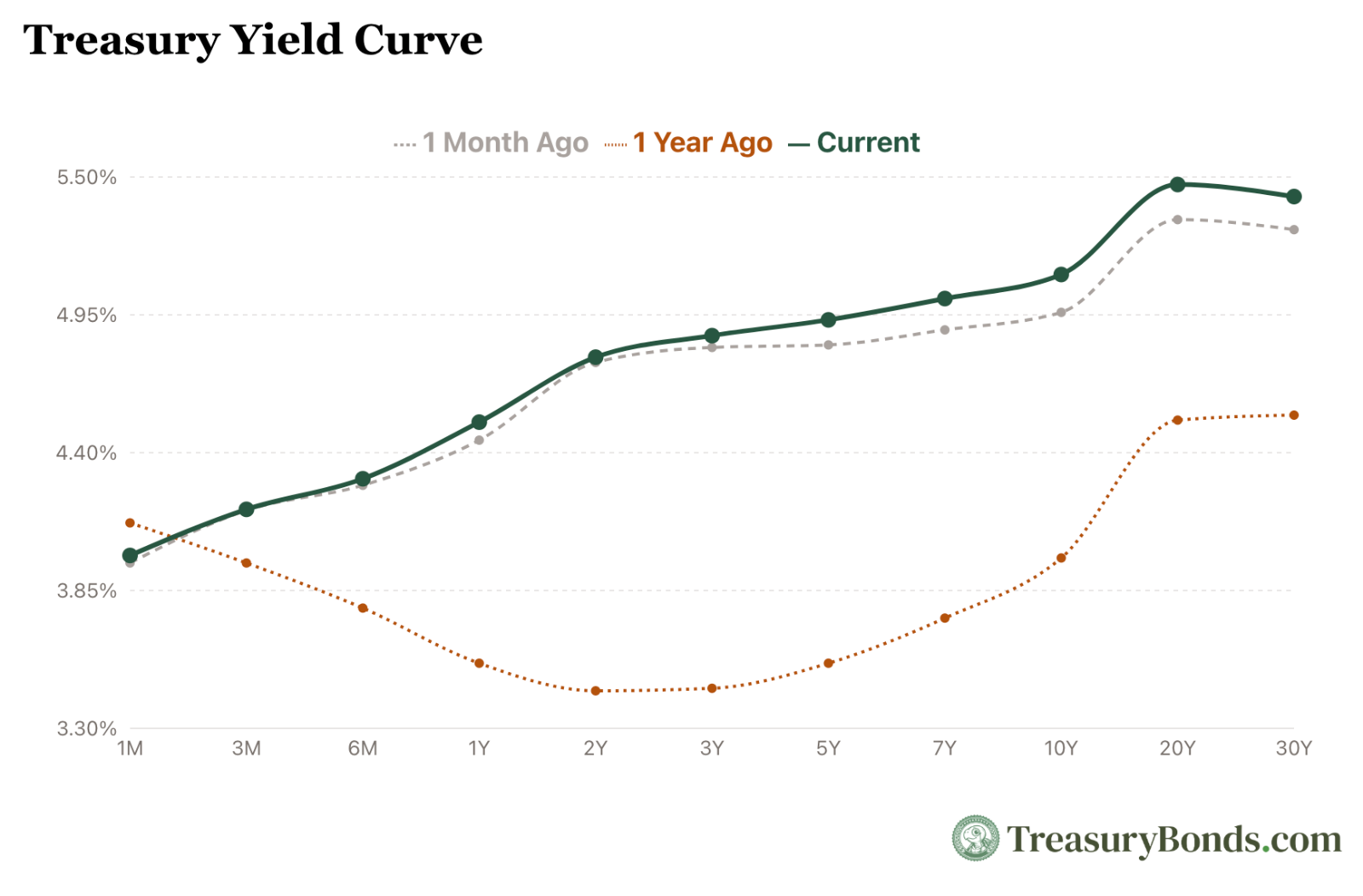
Here’s the math. On $100,000, every 1 point the rate falls costs you $1,000 a year. The 30-year Treasury closed Friday at about 5.44%, and if you buy it today, that rate stays the same no matter what the bank does next.
A savings account pays a variable rate. Your money is available any day, but the rate can change any day too.
A CD locks the rate for its term, which might be one year or five. That’s better than savings, but it only lasts until the CD matures. CD penalties are also no fun if you need to withdraw them early. Then you reinvest at whatever rates are then.
A Treasury locks the rate until maturity, and a ladder of 10 to 30 year bonds can keep paying the rate you bought for years. To be fair, there is risk as well if you need to sell your position and rates have climbed higher.
Where Treasuries win
A longer lock. A 10-year Treasury at 5.10% or a 30-year at 5.44% keeps paying that rate. A savings rate can fall next month, and a CD can only protect you for its term.
State taxes. Treasury interest is exempt from state and local income tax. Savings and CD interest isn’t.
Reinvestment risk. A short-term CD matures into whatever rate the market offers. A long ladder pushes that decision out by years.
Where the bank wins
FDIC insurance covers deposits up to the limits, which makes bank accounts about as simple and safe as it gets.
No price swings. Savings and CDs don’t fall in value the way a long bond can when rates rise.
Easy access. If you may need the money soon, savings is built for that.
What fixed income investors need to know
Keep emergency money in savings, where easy access matters more than yield.
For money you won’t need for years, consider locking in today’s rate with a ladder instead of trusting a variable one.
Short-term CDs help, but they push the question back a year or two, not 10 or 30.
Compare after-tax yields if you live in a state with income tax.
Don’t wait for rates to fall to decide. By then the best savings rates will already be lower.
Bottom line
With rates for longer-duration Treasuries as attractive as we’ve seen in a couple of decades, use the bank for money you may need soon, and use Treasuries for money you want working at today’s rate for a long time.