If you worry that AI will gut software, you probably don’t want to own the stock. A bond is a different question.
That’s why the Salesforce 6.55% bond due March 15, 2056 is worth a look.
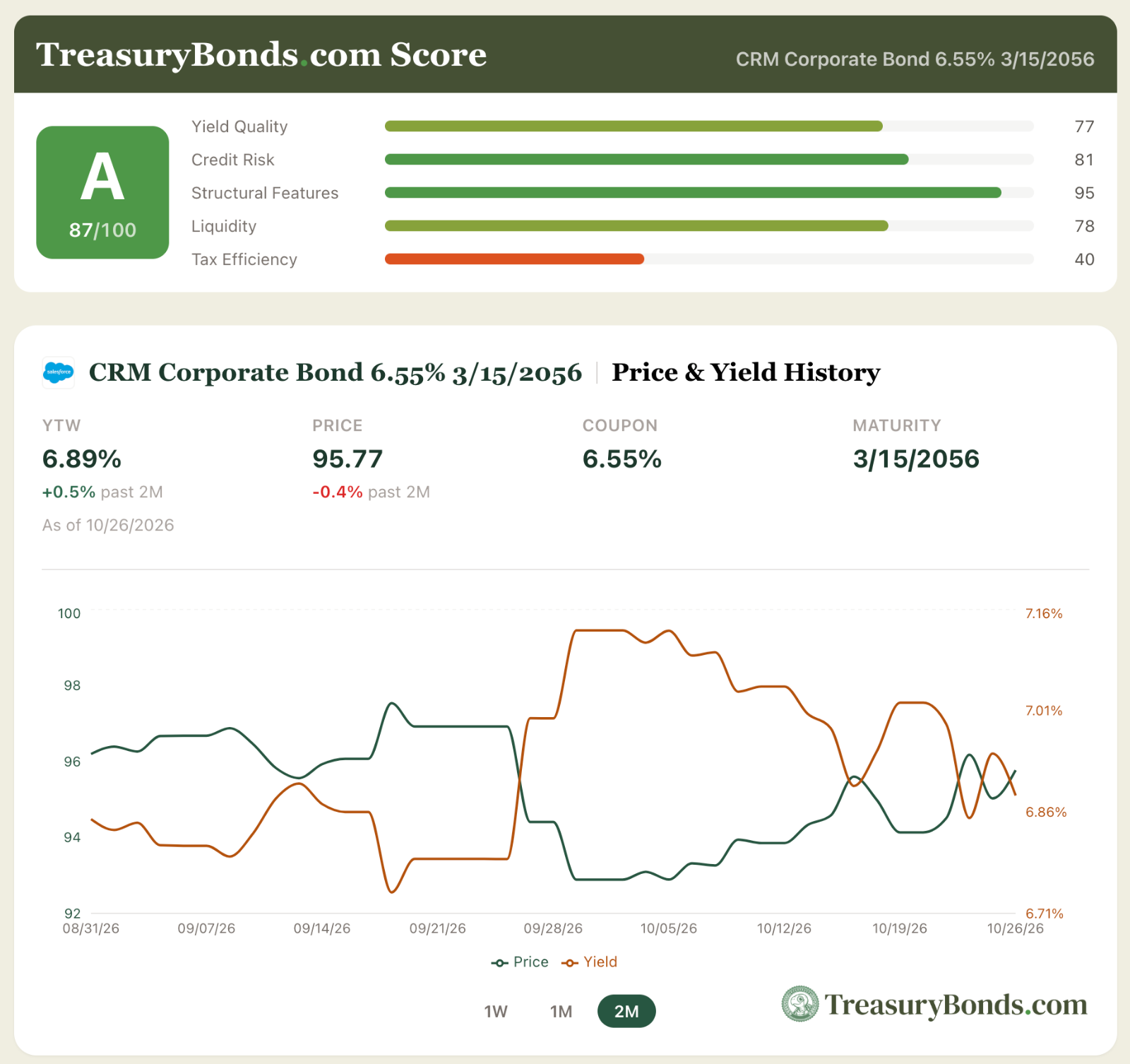
It scores an A (87/100) on our TreasuryBonds.com Score, with a yield to worst of 6.95%.
That's 1.65 percentage points above the 5.30% maturity-matched Treasury.
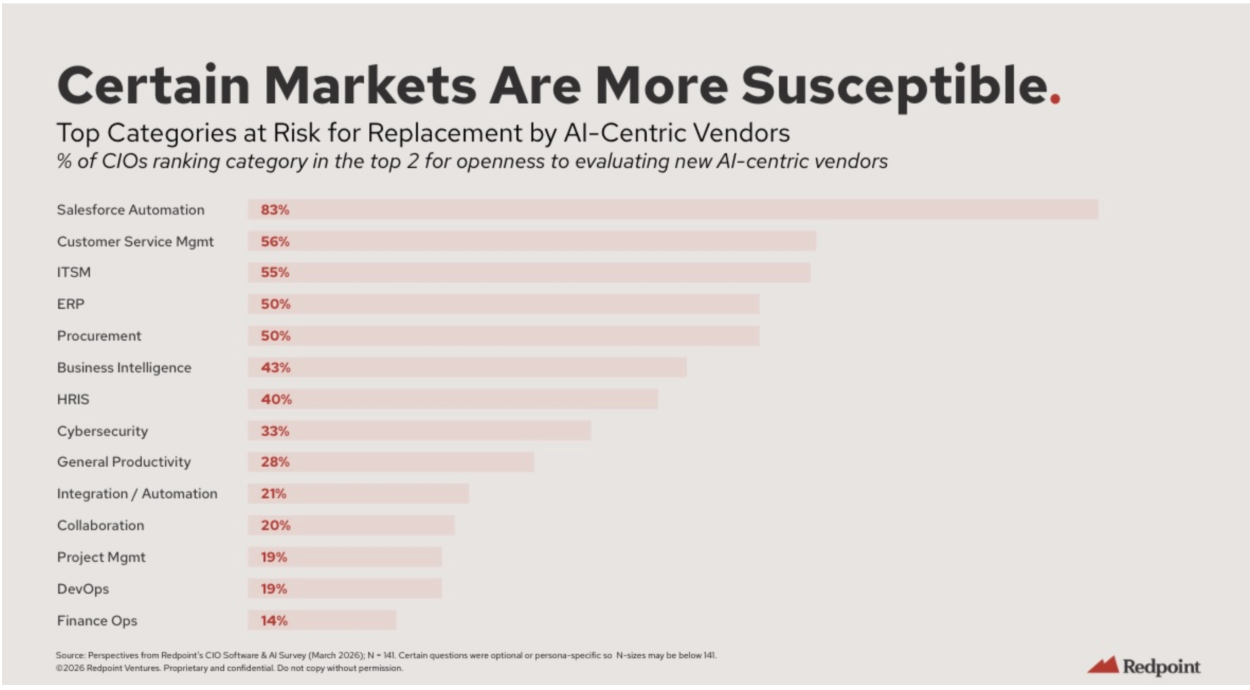
The fear is that AI agents and AI coding tools make it easy for companies to build their own software or cut the number of employees who need a license.
Salesforce charges per user, so that matters. It’s why the stock has been under pressure.
What the latest report shows
Salesforce reported fiscal Q2 on August 26:
Revenue: $11.3 billion, up 11%. That includes about $456 million from the Informatica acquisition.
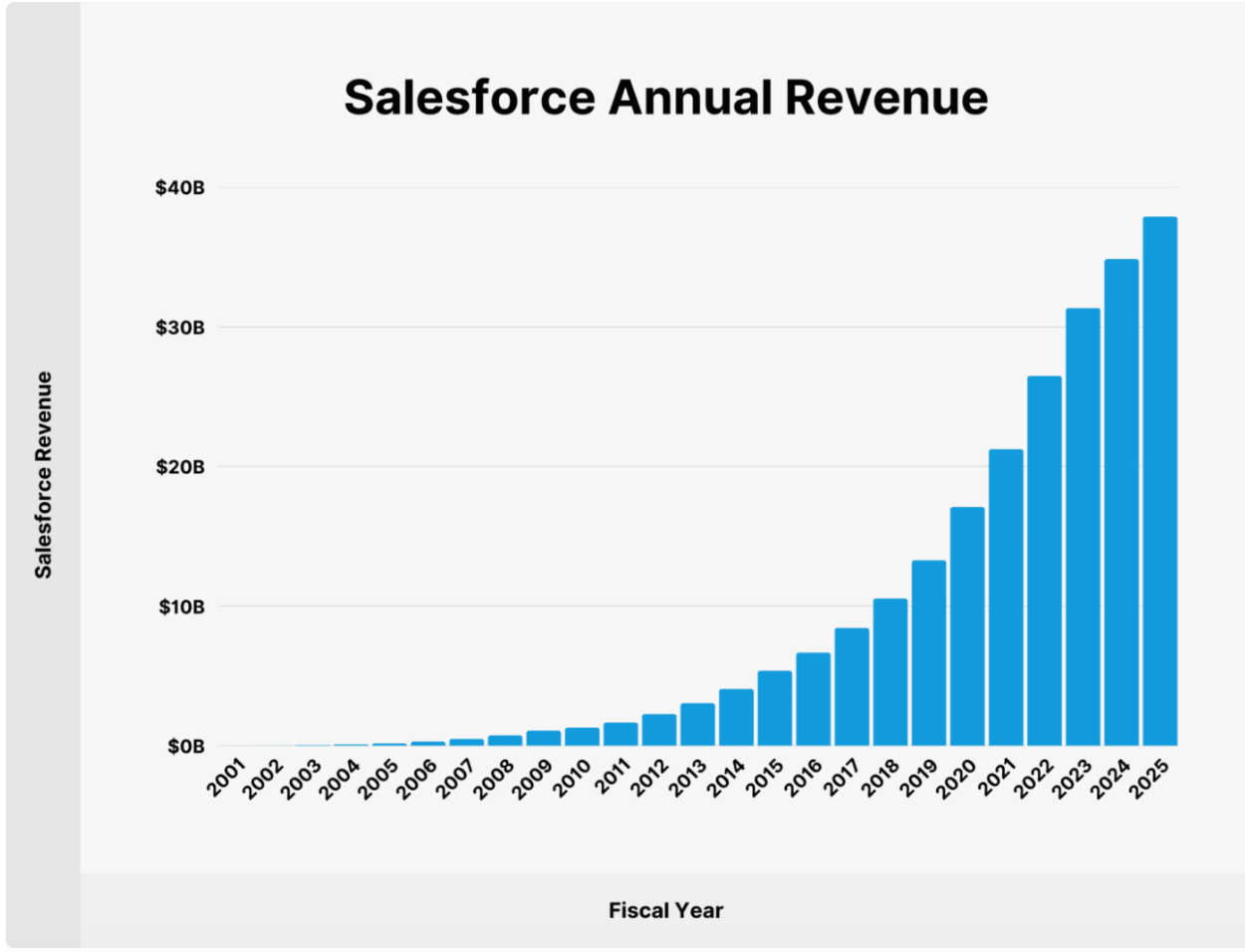
Now look at how the business is actually performing, because that’s what pays bondholders. Salesforce’s operating margin was 34.1% on a non-GAAP basis, so about a third of every revenue dollar is profit on that adjusted measure. The GAAP number is lower at 20.5%, and it’s worth knowing both. Cash flow is moving the right way too: operating cash flow was $1.3 billion, up 71%, and free cash flow was $1.1 billion, up 81%.
Everyone assumes AI is only a threat to Salesforce, but Agentforce and Data 360 annual recurring revenue reached nearly $3.9 billion, up over 210%. Agentforce alone passed $1.5 billion, up over 240%. Management raised full-year revenue guidance to $46.1 billion to $46.4 billion, with a non-GAAP operating margin of about 34.3%. The CFO said new-business growth was “the strongest it’s been in four years.” So Salesforce isn’t just defending against AI, it’s selling AI products to the customers it already has.
Why the yield looks attractive
Here’s the thing about this Salesforce bond: you’re getting paid well to own it. It yields 1.65 points over a comparable Treasury. When Salesforce sold its 30-year bond back in March, it priced at +185 basis points over Treasuries, so the spread has tightened since then. Look at the 10-year piece of that same deal, though. It priced near +135, compared with about +50 on a similar Salesforce bond in 2021. That means investors are being paid a lot more than they were a few years ago to lend to the same company.
The price helps too. At 95.03, the bond trades below par. If rates fall or the spread narrows, the price could move up toward 100. And if you simply hold it to maturity, you collect the coupon along the way and get your $100 back at the end.
Then there’s the cushion behind it. Salesforce is sitting on $8.3 billion in cash and another $3.1 billion in marketable securities, plus $11.3 billion in strategic investments. That’s a lot of financial flexibility for a company that owes you interest.
The risks
I’m not going to pretend the AI threat isn’t real, because it is. Salesforce charges per user, so if AI lets companies get by with fewer employees, fewer seats get sold. Some analysts think the biggest test could come in the second half of 2027, when more computing capacity makes AI coding tools much more powerful. That matters here because this is a 30-year bond. You’re not betting on one quarter, you’re betting that Salesforce adapts for decades. That’s a long time in technology, and it’s why I’d size a position like this carefully.
Bottom line
Salesforce is a profitable, cash-generating company with about $66 billion of contracted revenue and a fast-growing AI business. The 2056 bond pays 6.95%, 1.65 points more than a Treasury. If you think AI will damage software stocks, the bond is a way to own the business with a claim ahead of shareholders. The caveats are the rating pressure from the buyback debt and 30 years of exposure to technology change.