
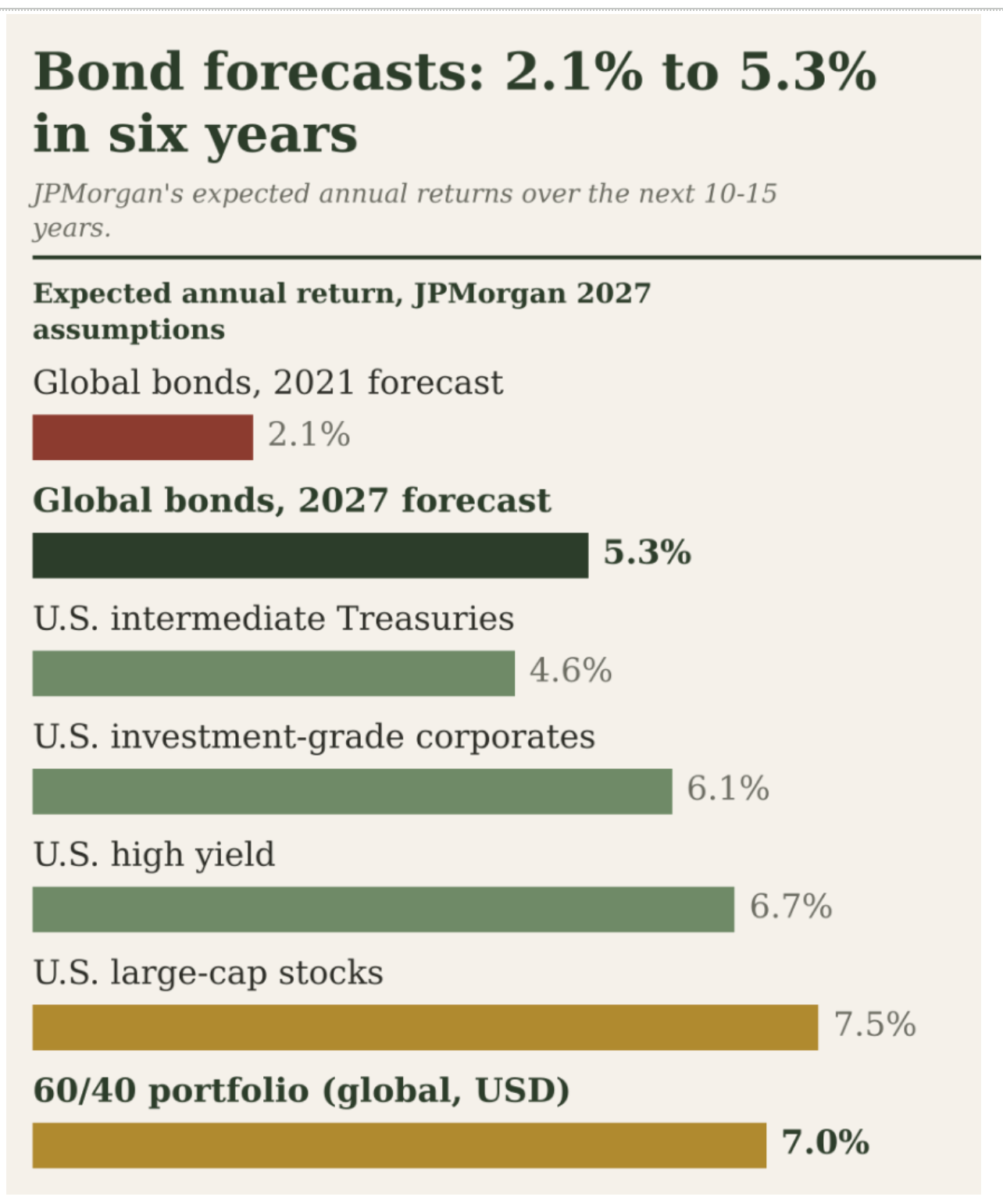
JPMorgan’s new long-term forecast: a classic 60/40 stock-bond portfolio is expected to return about 7% a year over the next 10 to 15 years.
For anyone who spent the last few years hearing that 60/40 was dead, that’s a notable change.
JPMorgan’s 2027 assumptions, released October 19, put expected annual bond returns at:
- U.S. intermediate Treasuries: 4.6%
- U.S. investment-grade corporates: 6.1%
- U.S. high yield: 6.7%, up from 6.1%
- Global aggregate bonds: 5.3%
JPMorgan’s global bond forecast was just 2.1% in 2021. Today’s 5.3% is its highest in two decades.
Why higher starting yields matter
When you buy a bond with a higher yield, you’re locked into more income from day one.
You don’t need rates to fall to make money. Falling rates are a bonus.
For stocks, JPMorgan projects 7.5% a year for U.S. large caps, up from 6.7%, and the same 7.5% for global equities.
The firm cites AI adoption, productivity gains and resilient corporate profits, and says it has raised its productivity assumption sharply on an AI-driven investment cycle.
The caveat
JPMorgan says it expects stock-bond correlations to become more positive and less stable because inflation is likely to stay volatile.
That’s a big deal for how a 60/40 behaves.
The old playbook says bonds cushion you when stocks fall. In 2022, both fell together, and that wasn’t a fluke.
If inflation is the main shock, bonds and stocks can drop at the same time.
So the 60/40 may offer better returns, but it may not offer the same shock absorber it did for decades.
Overall, JPMorgan’s message is that bonds are back, stocks are still expected to deliver, and the combination looks better than it has in years.
But the forecast comes with a warning: when inflation is volatile, stocks and bonds can fall together, so diversification isn’t automatic.