
Treasuries, investment-grade corporate bonds and investment-grade municipal bonds can behave very differently, even in the same year. A simple comparison of two years shows how much.
Two years, two very different outcomes
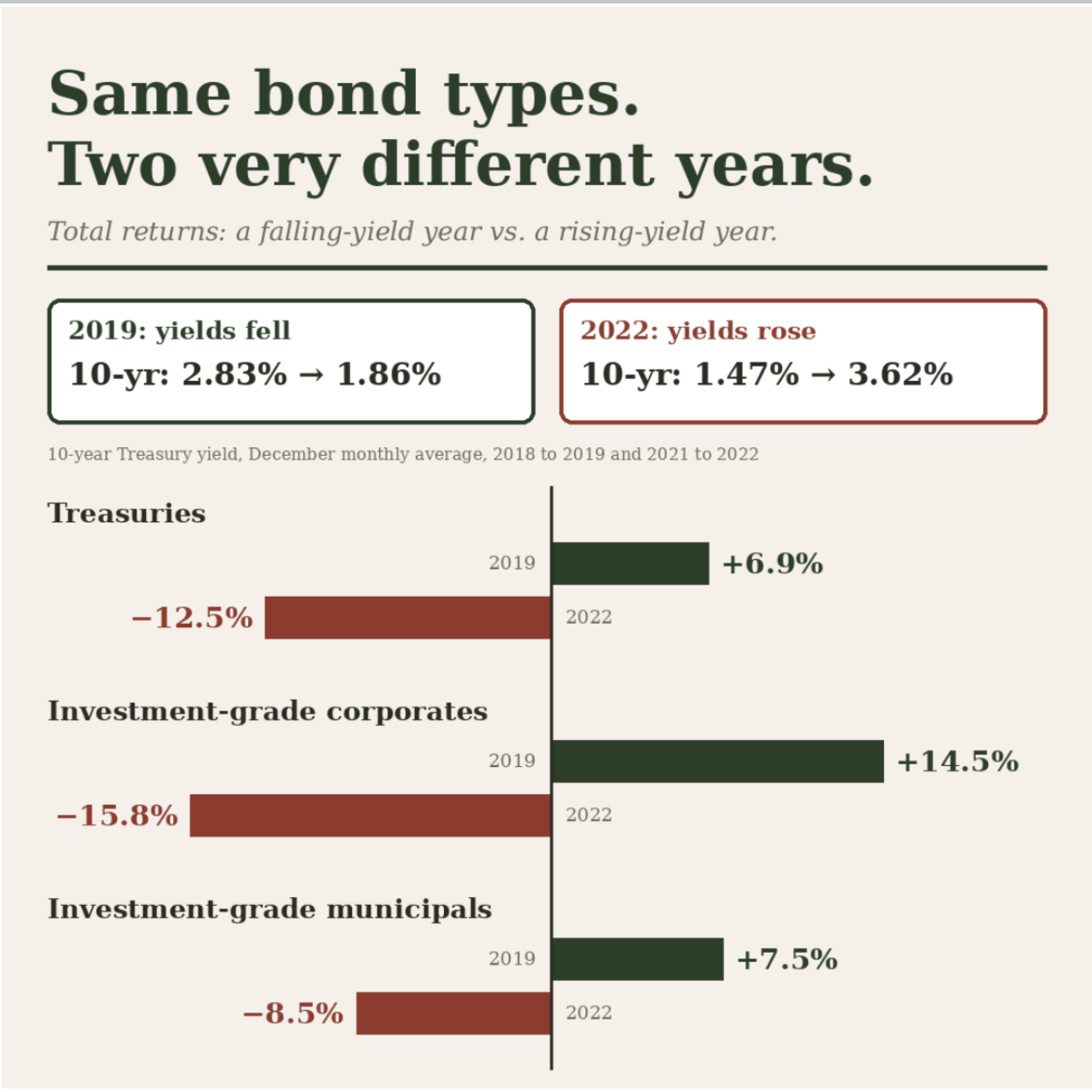
Everything went up in 2019 and everything went down in 2022, so rates clearly matter.
But look at the gaps. In 2019, corporates beat Treasuries by about 7.6 percentage points.
In 2022, corporates did worse than Treasuries by about 3.3 points, and munis did better than Treasuries by about 4 points.
Why the results differ
Interest rates help explain these outcomes, but they aren’t the only driver:
Duration affects price sensitivity. The longer a bond’s duration, the more its price moves when yields change.
In a good year, narrowing spreads give corporates extra return on top of falling yields. In a bad year, widening spreads can add to the pain.
The muni market moves to its own rhythm, which is one reason it can diverge from Treasuries.
The lesson here is don’t treat bonds as one bucket. Know what bond types you own and what could move each.