
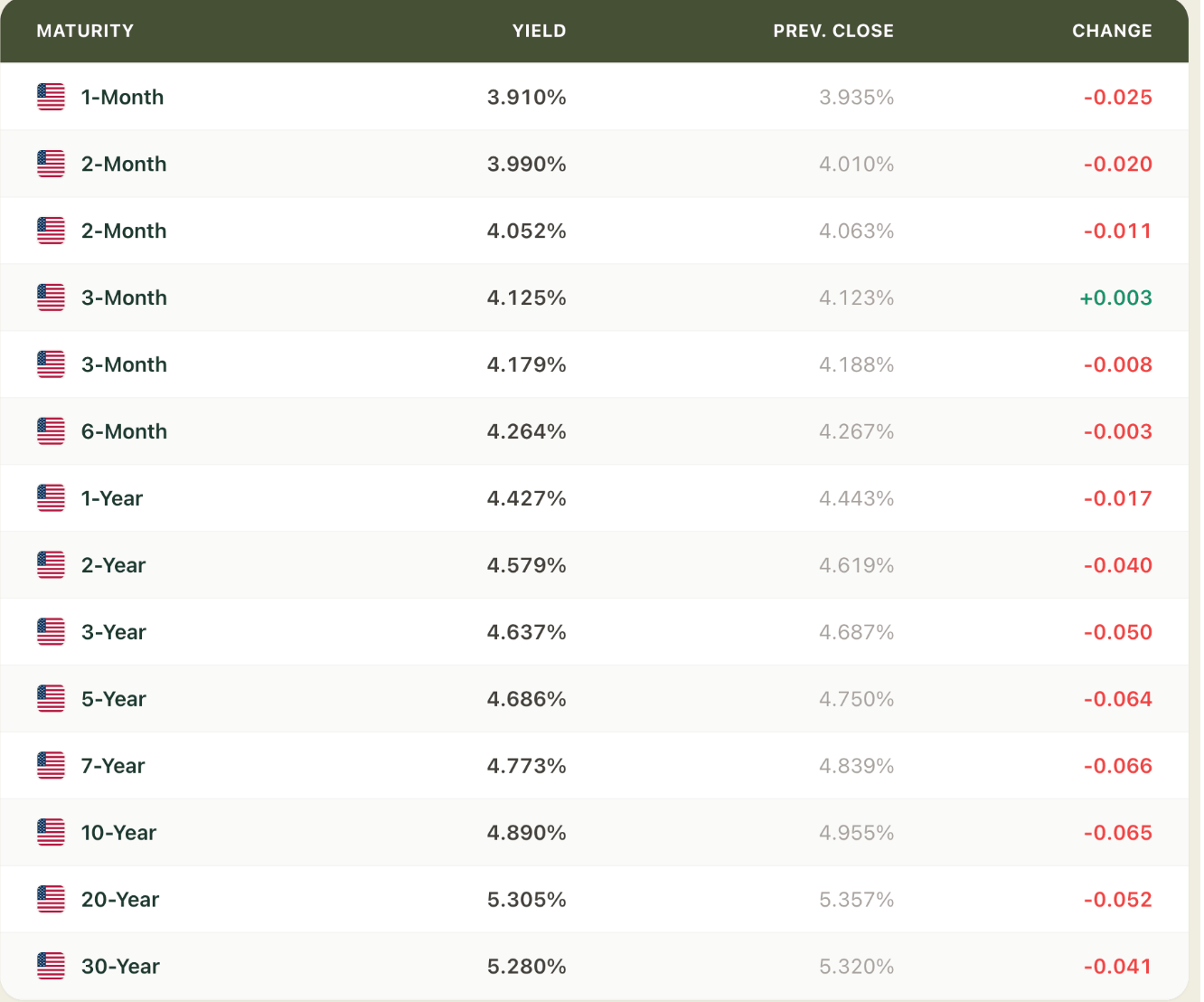
On Wednesday the bond market got what it wanted: lower oil, a new political map and a calmer outlook for inflation. Treasuries rallied hard, sending the 10-year note and shorter maturities to their lowest closing yields in about eight weeks.
Oil did the heavy lifting
The real driver was energy. WTI crude fell 8.3% to $88.23 a barrel, its lowest settle since late August. It dropped below $90 and stopped near its 200-day moving average of 86.92. The thinking in the market was that the power shift in Washington could force a quicker end to the Iran conflict, which would mean lower energy prices and less inflation pressure. Lower oil is good for bonds because it eases the inflation risk that has been keeping yields elevated.
The data was solid, not scary
ISM Services: 54.5% in October, a hair below the 54.8% consensus and down from 54.9%. Anything above 50 is expansion, so the sector is still growing, just a bit slower, with input prices still rising.
ADP employment: Private payrolls rose 86,000, beating the 75,000 consensus. Most of the hiring was in services (82,000).
Trade deficit: Narrowed to $105.0 billion in September from $105.7 billion. Computers and computer accessories drove both exports and imports higher.
S&P Global US Services PMI: The final October reading was 56.1, down from the 57.9 flash and 58.8 in September.
MBA mortgage index: Down 1.2% after last week’s 3.4% jump. The purchase index fell 2.0% and refinancing rose 0.1%.
Crude inventories: Fell by 865,000 barrels.
Supply is next
The Treasury’s quarterly refunding statement set three auctions for next week: $58 billion in 3-year notes, $42 billion in 10-year notes and $25 billion in 30-year bonds. The Treasury also said it expects to hold nominal coupon and floating-rate note auction sizes steady for the next several quarters.
Thursday brings preliminary Q3 productivity (3.1% expected), unit labor costs (1.4%) and weekly jobless claims (197,000 expected).
Overseas, the central banks are leaning hawkish
ECB policymaker Nagel said a December rate hike will likely be needed.
The Times shadow Bank of England committee voted unanimously that the BoE must raise rates.
Eurozone October CPI came in at 4.0% year over year, with core at 2.5%. Eurozone and French service PMIs weakened, and France’s fell to 46.2.
China’s services PMI missed at 50.8, and Australia’s slipped into contraction at 48.5.
What to watch in the US
The 10-year around 4.89% and the 30-year around 5.28% remain historically attractive. Investors who want to lock in income have more to work with than they did a few months ago.
Supply is coming. Next week’s $125 billion in auctions could test demand, especially the 30-year.
Central banks abroad leaning toward hikes is a reminder that rates aren’t done. Keep an eye on whether that spills over into U.S. yields.
Diversify maturities. The intermediate part of the curve is where yields fell most today, so a ladder smooths out the ride.
Yields are at eight-week lows, but they are still high by recent standards, and next week’s auctions and the foreign central banks could change the picture quickly.