
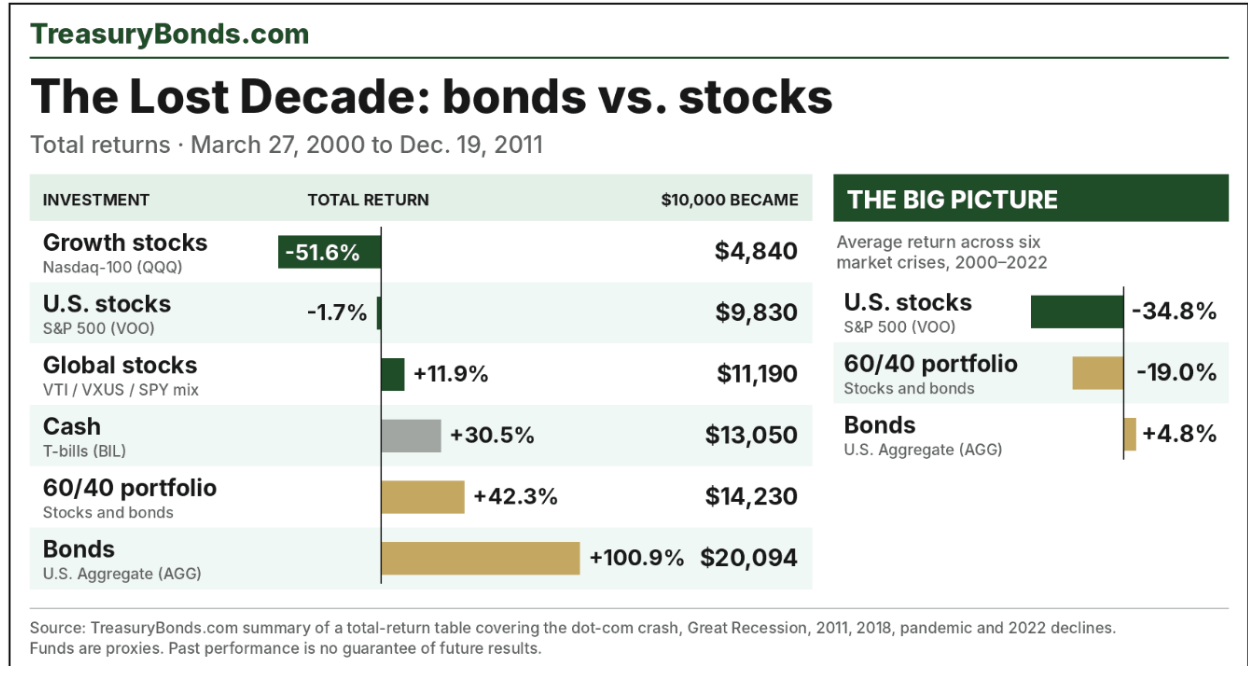
Imagine investing $10,000 in the S&P 500 in March 2000, near the top of the dot-com boom, and then waiting nearly twelve years. By December 2011, you’d have had $9,830. That’s a total return of -1.7% after more than a decade of waiting.
Meanwhile, a simple 60/40 portfolio of stocks and bonds returned +42.3% over the same stretch, turning $10,000 into about $14,230. A portfolio of high-quality bonds did even better, returning roughly 101%.
What happened to stocks
The Lost Decade began with the tech crash and ended with the Great Recession. In between, investors got two brutal bear markets.
Growth stocks, which had been the market’s darlings, fell about 52% over the period. Even U.S. stocks overall barely broke even.
Why bonds mattered
Bonds did their job when it counted.
Across six major market crises dating back to 2000, U.S. stocks lost an average of 34.8%.
A 60/40 portfolio lost about 19.0%, and the broad bond index gained about 4.8% on average.
That cushion is what let balanced investors stay invested and avoid the panic selling that locks in losses. Even cash returned about 30% over the period, more than stocks did.
Diversification works over long stretches. A 60/40 mix beat all-stock portfolios by a wide margin over this period.
Yields are higher today. The 10-year Treasury yields about 4.8%, compared with roughly 6% in early 2000, so investors are being paid again to hold bonds.
Rebalance. Selling what’s held up and buying what’s fallen is easier when part of your portfolio isn’t falling.
Bottom line
The Lost Decade is the clearest argument for owning bonds. The investor with only stocks waited more than eleven years to get nothing. The investor with a balanced portfolio made roughly 3% a year, about 42% in total, and slept better along the way.