
The 2027 income tax brackets are out. It’s good news for anyone whose income, including bond interest, rises a little each year.
Interest from Treasuries, corporate bonds, CDs and bond funds is generally taxed as ordinary income, so what you keep depends on which bracket the interest lands in.
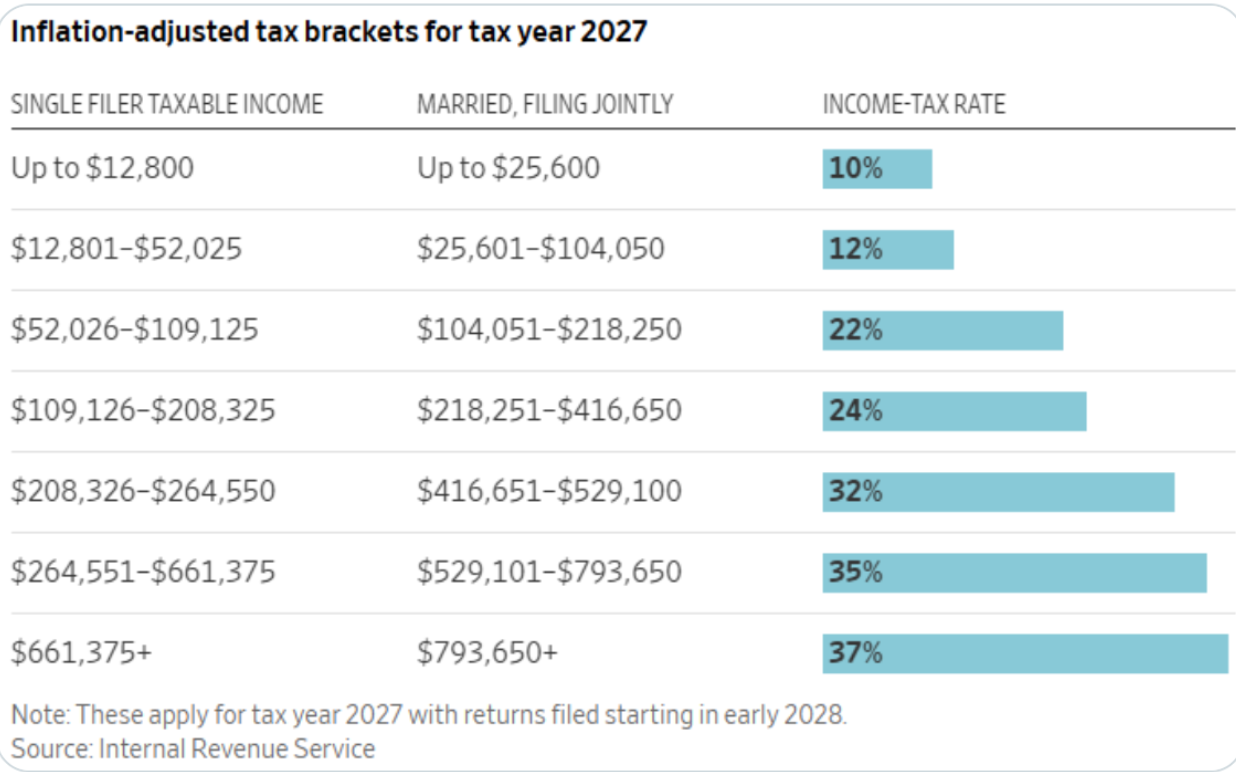
Why the brackets matter for bond income
Take a retiree with a $1 million bond portfolio yielding 5%.
That’s $50,000 of interest, all taxed at ordinary rates.
Add a pension or Social Security and that interest can push income across a bracket line.
Because the 2027 brackets are wider, more of that income stays in the lower brackets than it would have under the 2026 numbers.
Taxable yield versus tax-free yield
This is where the brackets matter most.
A tax-exempt municipal bond’s yield looks lower, but you may keep more of it.
For example, a muni yielding 3.5% is equal to a taxable yield of about 4.5% in the 22% bracket, 4.6% at 24%, 5.2% at 32%, 5.4% at 35% and 5.6% at 37%.
Compare that with the 10-year Treasury, which closed Friday at about 4.86%. In the lower brackets, Treasuries may come out ahead, especially since they’re exempt from state income tax.
In the top brackets, munis can win.