If you’ve been sitting on gains, the IRS just gave you a little more room. On November 5, it released the 2027 inflation adjustments in Revenue Procedure 2026-35, and the long-term capital gains thresholds all moved up.
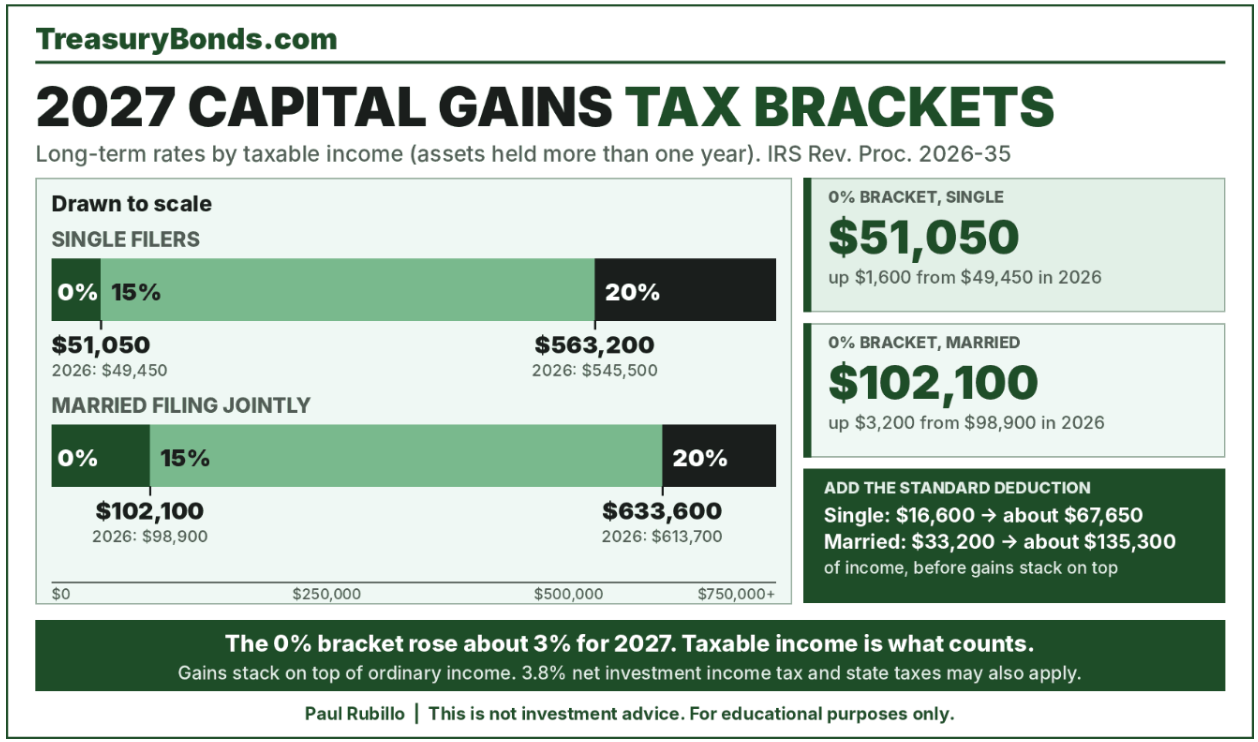
For single filers, the 0% rate applies to taxable income up to $51,050, a $1,600 increase from $49,450 in 2026.
The 15% rate runs up to $563,200, and 20% applies above that.
For married couples filing jointly, 0% goes up to $102,100, a $3,200 increase from $98,900.
The 15% rate runs up to $633,600, and 20% applies above that. That’s roughly a 3% increase across the board.
The standard deduction matters
These are taxable-income thresholds, so the standard deduction comes off first.
For 2027 it’s $16,600 for single filers and $33,200 for joint filers.
Add that to the 0% ceiling and a single filer could have about $67,650 of income and a married couple about $135,300.
Gains stack on top of your ordinary income, though, so that’s a rough guide, not a guarantee.
Implications for fixed income investing
Long-term gains on bonds or bond funds held more than a year follow the same rates. Interest income is taxed as ordinary income.
Interest from Treasuries is still exempt from state and local income tax, which matters more for investors in high-tax states.
If your income is low in a given year, for example early in retirement, selling appreciated holdings can be very tax-efficient.
Selling a bond below par and holding it to maturity can create taxable gains or losses, so know your cost basis before you sell.