
Hotter-than-expected U.S. inflation set off a Treasury selloff this week, and it spread across the Pacific. The U.S. 2-year yield jumped 18 basis points to 4.74%, its biggest one-day increase since April 2025.
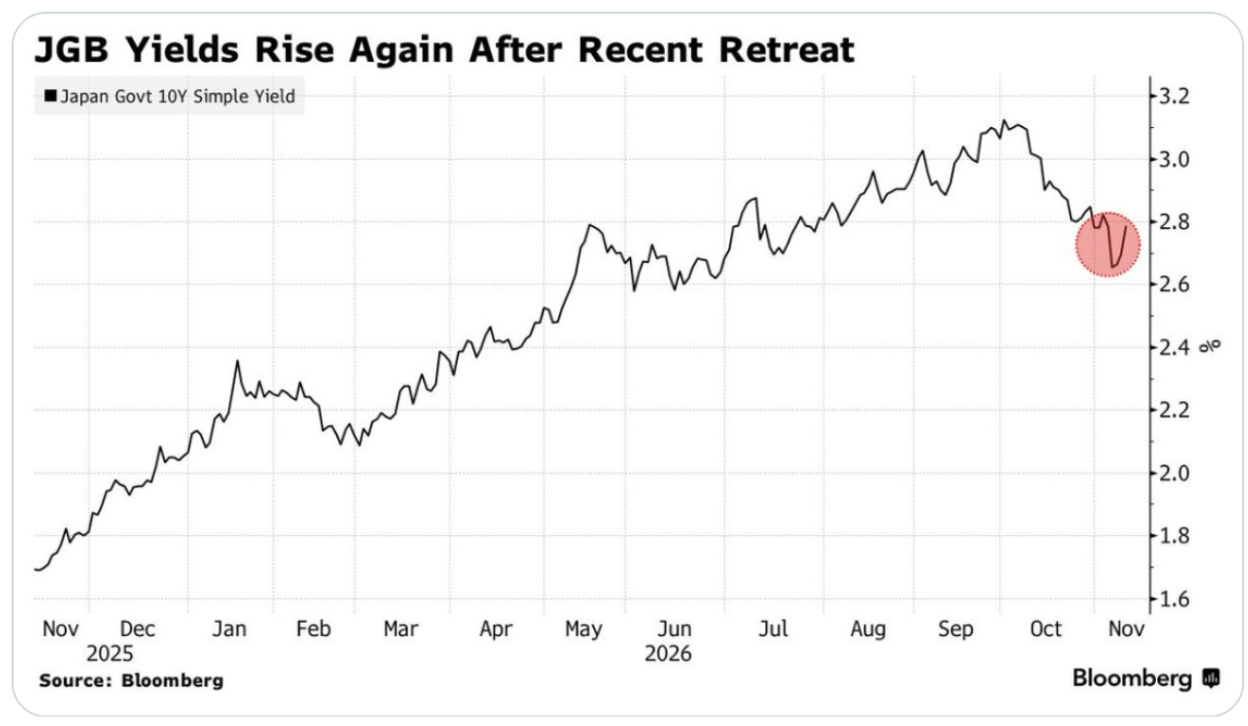
Japanese government bonds sold off across maturities: the 2-year rose 8.5 basis points to 1.86%, the 5-year climbed to 2.195%, and the 10-year gained 10.5 basis points to 2.795%.
What Makes This Move Interesting
Just days earlier, a selloff in U.S. stocks had pushed investors toward safe-haven Japanese bonds, which pulled JGB yields lower. In the chart, you can see that dip: the 10-year yield slid from a peak near 3.1% in the fall to about 2.7%.
Then the U.S. inflation report flipped it.
Instead of stock weakness sending money into Japan, higher Treasury yields dragged Japanese yields up with them.
It also ended several sessions of declining JGB yields.
Japan has its own rate story.
The Bank of Japan’s policy rate is 1.25% after a September hike, and markets are focused on a possible quarter-point increase to 1.5% in December.
Hawkish comments from Fed Governor Christopher Waller added to the pressure.
Why does that matter for U.S. investors?
Because Japan has been a big source of cheap funding around the world.
Higher Japanese yields make yen borrowing more expensive, and that can put pressure on trades funded in yen if conditions turn volatile.
Bottom Line
Inflation news in the U.S. doesn’t stay in the U.S. A single hot report pushed the 2-year Treasury to its biggest one-day jump in more than a year and sent Japanese yields higher.
For bond investors, understanding that rates are a global story. When you buy a Treasury, you’re also exposed to what’s happening at the Bank of Japan and in currency markets.