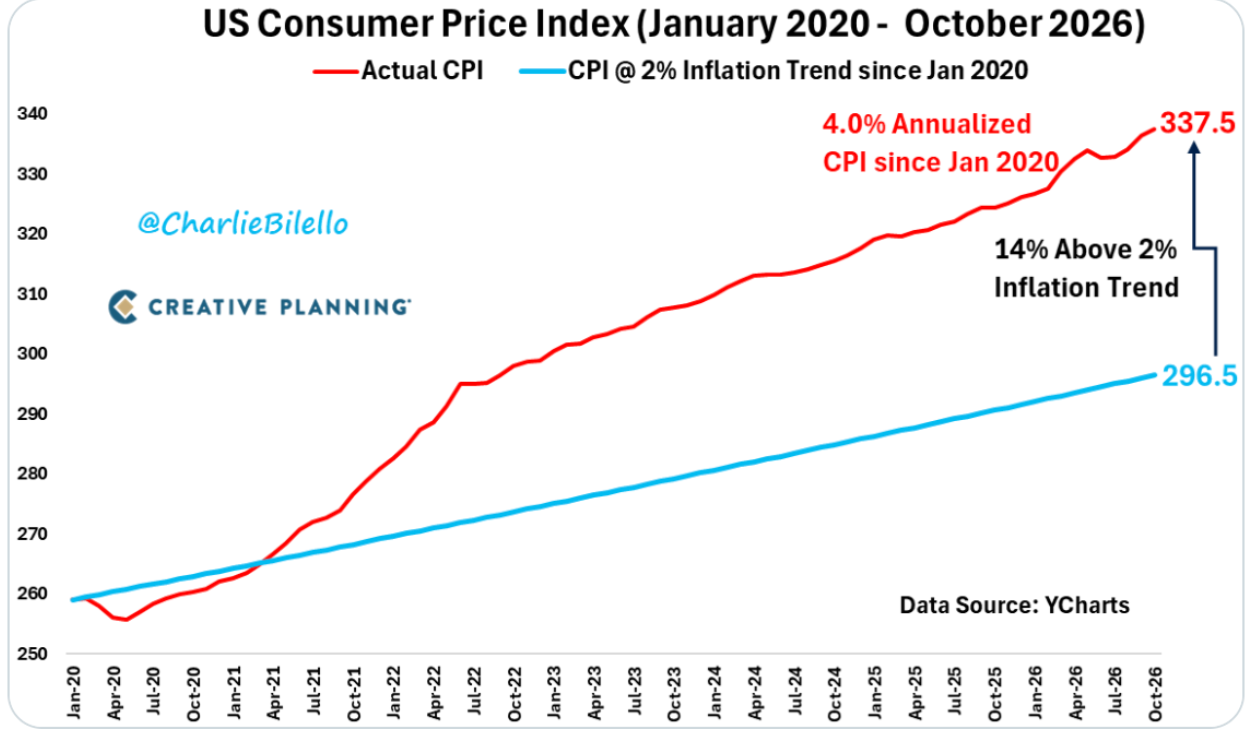
US consumer prices are now about 14% higher than they would be if inflation had simply averaged the Fed’s 2% target since January 2020.
The chart shows the actual CPI line (about 337.5) climbing away from the “2% trend” line (about 296.5). We all feel this in our grocery bill, the insurance premium, and the gas pump.
How We Got Here
The gap built up in stages: the 2021-2022 surge, a long stretch where inflation cooled but prices stayed high, and now a fresh push. October’s CPI rose 0.4% for the month and core rose 0.3%, both above forecasts, and one estimate puts the annual rate near 4%.
Energy and food were part of it, and September’s gasoline jump was a big piece of the recent run. For households, “inflation is coming down” never meant prices came down.
The Fed Debate
Markets are now pricing a December hike at roughly 87%, with a smaller chance of a half-point move, and at least one Fed governor reportedly sees a half-point as needed for credibility.
There’s another side to the argument. Raising rates can slow inflation, but it rarely brings the price level back down.
To erase a 14% gap, prices would have to fall, which would mean deflation and likely a deep recession.
No politician wants that to happen while they are in office. So while a reset in the economy would fix what ails, the obsession with stock prices will be what actually keeps the economy from receiving the proper dosage to eradicate the inflation influenza.