
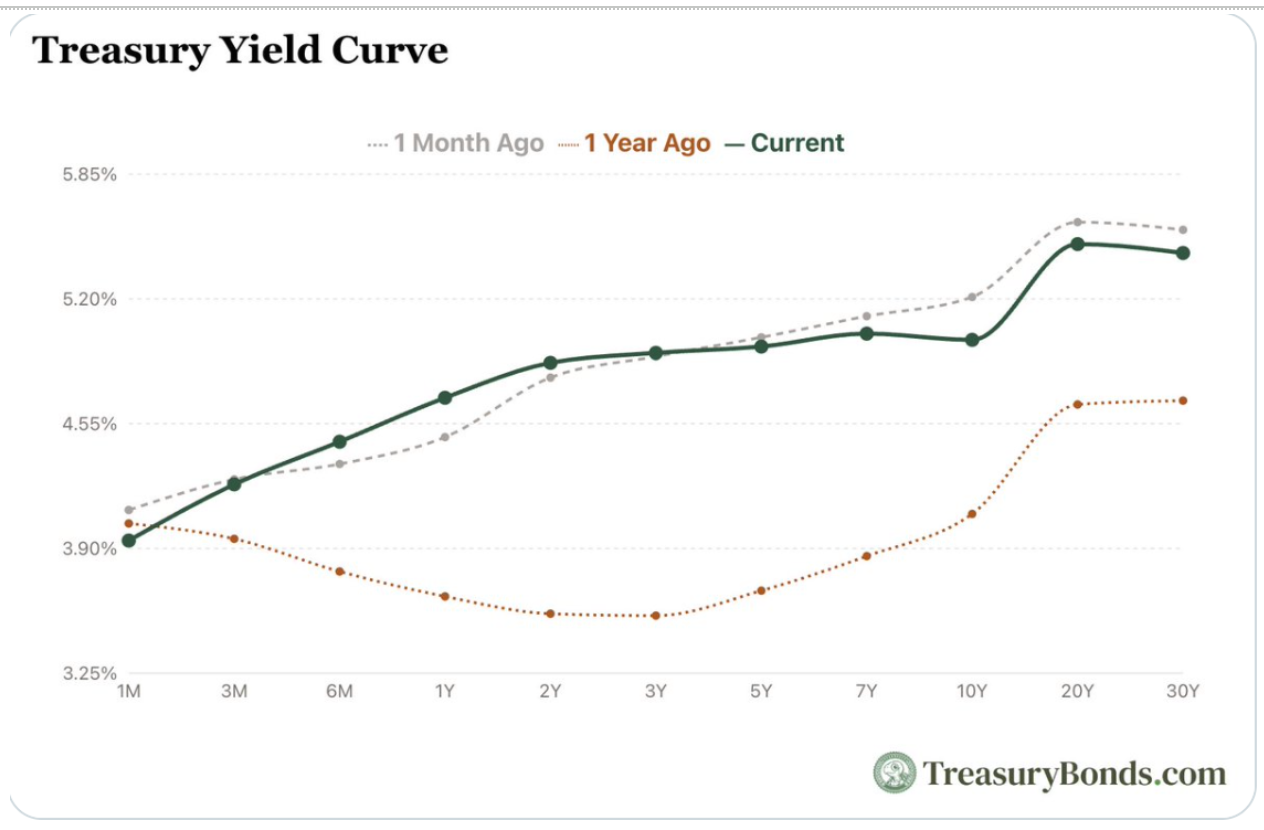
The 2-year Treasury now yields almost as much as the 10-year. Over the past month, the 2-year rose 8 basis points while the 10-year fell 22.
The gap between them went from roughly 42 basis points to just 12.
That’s only 0.12 percentage points of extra yield for taking on eight more years of interest rate risk.
 Why It Happened
The front end of the curve follows the Fed. With markets pricing a December hike, and a growing chance of a bigger half-point move, short-term yields have been pushed up.
The 10-year has gone the other way over the month. Longer yields are set by growth, inflation expectations and the demand for safety, and investors may be less sure the Fed’s hikes will leave the economy unscathed.
The result is a flatter curve: short rates up, mid-range rates down, and not much reward for going out in time.
Understanding Interest Rate Sensitivity
The old rule says you get paid more for lending longer. However, a 2-year note yielding close to a 10-year note gives you almost the same income with far less price risk.
A 10-year bond has roughly four times the interest-rate sensitivity of a 2-year, so a small rise in yields would hurt it much more.
The other side of the trade: if yields fall, the 10-year gains more, and a short-term holder faces reinvestment risk when the note matures.
A flat curve also often signals that the market is less sure about growth, so it’s a reason to pay attention, not to panic.
What It Means for Fixed Income Investors
If you can get almost the same yield at 2 years, ask what the extra 8 years of risk is buying you.
T-bills, 2-year notes and short ladders reprice quickly if the Fed hikes again.
If rates fall later, locking in a longer maturity could look smart. Ladders help with both.
20- and 30-year yields are still higher, but they carry the most price risk.
Watch the Fed meeting on Dec. 8-9. A bigger hike could push the front end up and flatten or invert the curve further.
Bottom Line
A curve this flat is telling you that the market isn’t paying much extra for patience.
For many income investors, short and intermediate Treasuries now offer a similar yield with much less rate risk.
That doesn’t mean the 10-year is a bad buy, since it could rally if growth slows.
Either way, it’s a good time to check whether your portfolio’s duration matches what your income needs are and what you’re actually being paid for.