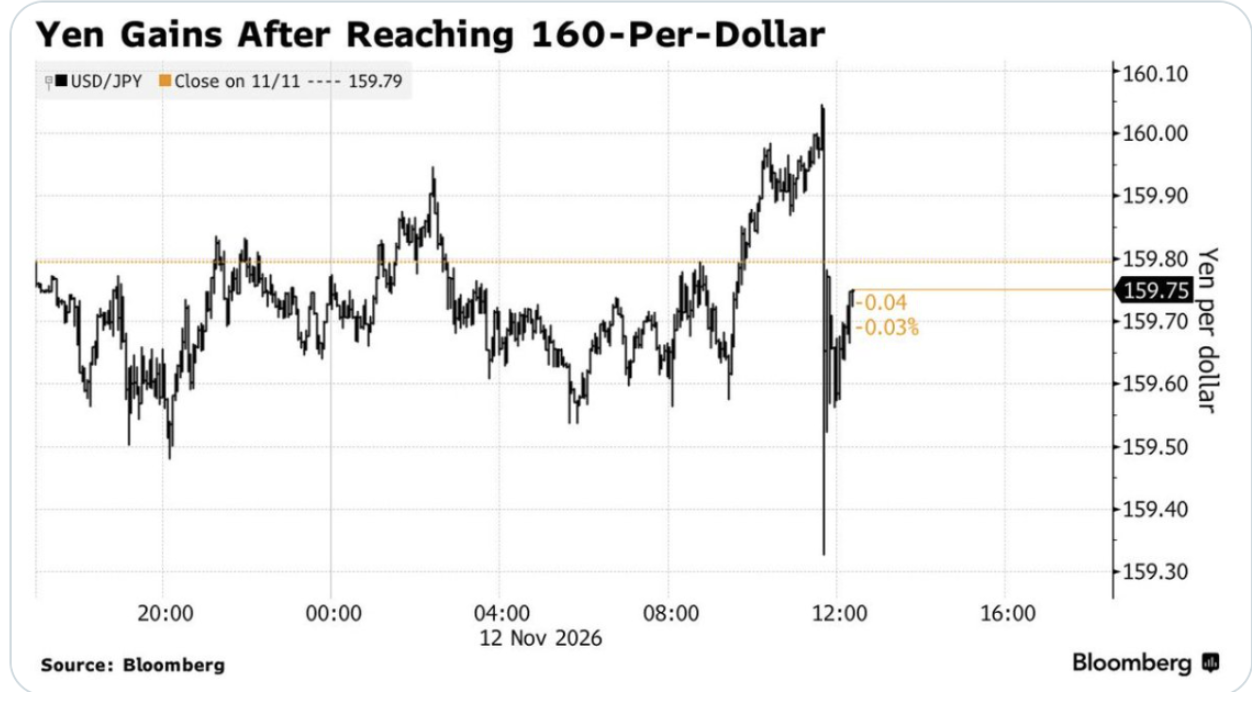
The Japanese yen briefly crossed 160 per dollar on Thursday, the first time since early September, and was trading around 159.9 on Friday.
Japan’s finance minister, Satsuki Katayama, warned against “one-sided” moves and said Tokyo would “respond appropriately.”
Its top currency diplomat, Atsushi Mimura, said it was “too early to forget” the intervention earlier this year. Japan spent roughly $96 billion (about 15 trillion yen) in the third quarter defending the yen.
 Why It Keeps Happening
U.S. policy rates are still more than 2.5 percentage points above Japan’s, and markets are betting on another Fed hike in December.
That spread gives traders a reason to hold dollars and borrow yen, even though the risk of intervention makes the trade harder to hold.
The Bank of Japan is expected to raise rates in December too, after saying at its October meeting it had effectively won its fight with deflation.
The New York Fed bought roughly 79 billion yen (about $500 million) for the Treasury on July 31, the first U.S. yen purchase since 1998. After that, the dollar-yen rate fell from about 164 to about 155 in a few days.
Why It Matters for Fixed Income
Japan is one of the biggest foreign holders of U.S. Treasuries, and Japanese investors have long been big buyers of foreign bonds.
If Tokyo intervenes, it could mean selling dollar assets to raise the dollars it needs, which is a possible source of Treasury selling.
If Japanese yields keep rising, as they did Tuesday when JGB yields jumped after the U.S. inflation report, Japanese investors have less reason to chase U.S. yields, especially with currency risk.
And if a rate-gap trade unwinds quickly, volatility can spill into rates, currencies and risk assets.
How Treasury Demand Could be Affected
A sharp yen rally or an intervention can shake Treasury demand and volatility.
Japanese buying has been a steady support for Treasuries. If it fades, yields may need to rise to attract other buyers.
Both the Fed and the BOJ meet in December. A narrower gap could change the trade.
Volatility from currency moves can hit longer bonds the hardest.
Bottom Line
For Treasury investors, the key question is whether Japanese money keeps flowing into U.S. bonds. Another reminder that bonds can react to news from places other than Washington.