
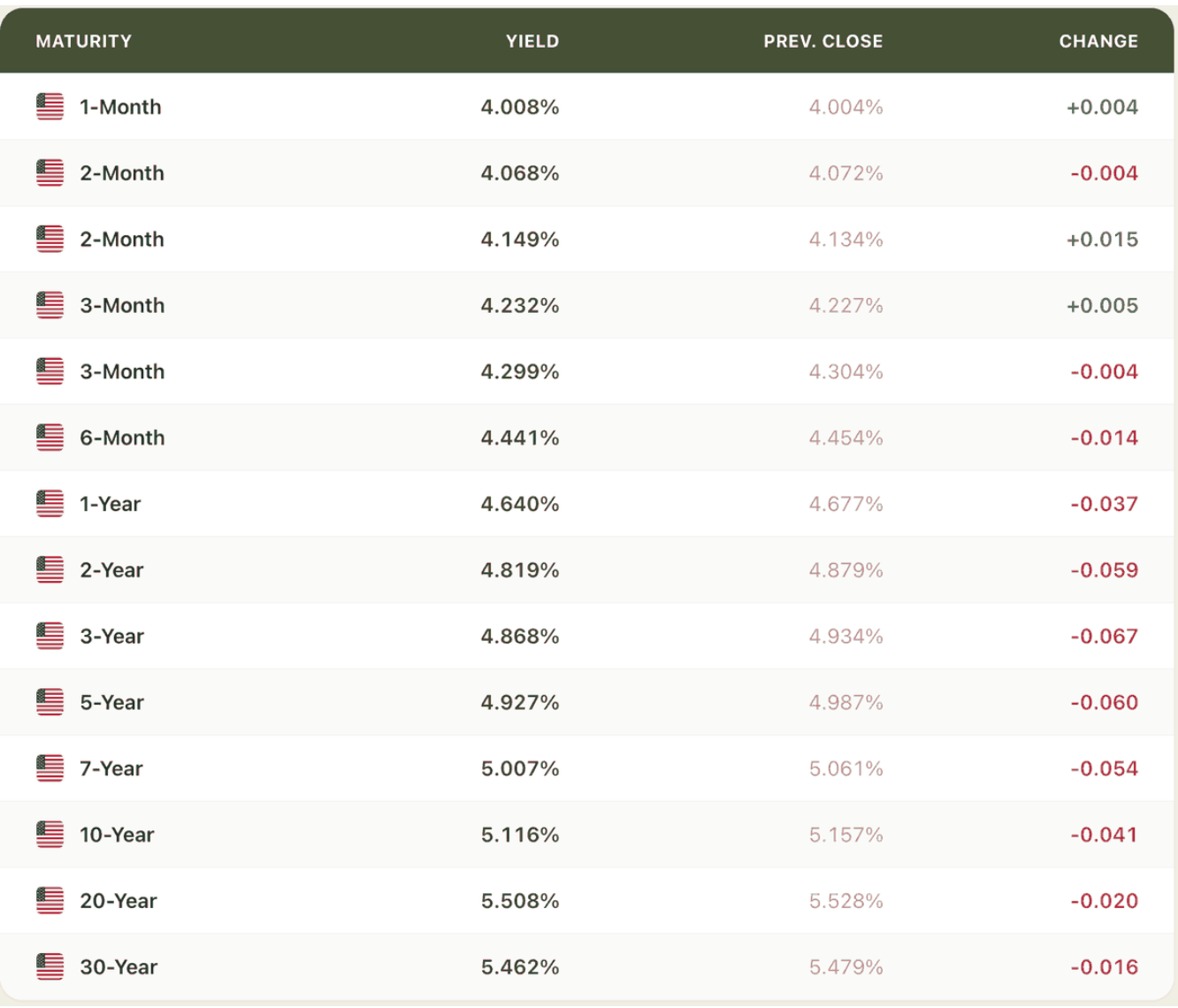
Treasuries opened the week higher and recovered a small part of last week’s big losses.
Weak stocks and soft growth data from Asia drove the action.
Bond buyers pushed shorter maturities higher first.
The rally faded in late morning, then picked up again when stocks sold off in the early afternoon.
The 5-year and shorter maturities rose past their morning highs. Longer maturities never got back to their best levels, and the 30-year finished about where it started.
What Else Moved
The Empire State Manufacturing survey fell to 7.8 in November, well below the 15.9 consensus and down from 25.5 in October.
WTI fell 3.5% to $85.50 and slipped back below its 200-day moving average (87.95).
The U.S. Dollar Index rose 0.2% to 103.57, continuing last week’s return to levels last seen in April 2025.
Gold fell 0.5% to $3,866 and copper fell 1.5% to $6.00.
EUR/USD slipped 0.2% to 1.1003, GBP/USD fell 0.2% to 1.3186 and USD/JPY dipped 0.1% to 159.45.
Headlines That Matter
Fitch says the U.S. sovereign outlook is deteriorating. It cites a divided government and a rising chance of shutdowns.
Cleveland Fed President Hammack, an FOMC voter, reportedly prefers 25-basis-point rate hikes over larger moves.
The Bank of England’s chief economist said more rate hikes are needed to counter inflation.
India’s wholesale inflation rose to 12.29% year over year, with fuel inflation at 32.84%.
China’s unemployment rate was 5.1%, and house prices fell 2.4% year over year.
What it Means for Fixed Income Investors
Hammack’s comment and the Bank of England’s stance point toward higher rates, not relief.
Bad numbers from Japan, China and the Empire State survey pulled yields down. Hot inflation data could reverse that quickly. The Fitch warning on shutdown risk adds to the case for long-term yields staying elevated.
With the 2-year near 4.84% and the 10-year above 5%, ladder builders have a lot of choices. Spreading purchases over time lowers the risk of buying right before another selloff.
Bottom Line
Long bonds barely moved, and the dollar and policy talk still lean toward higher rates. Tuesday’s retail sales, import and export prices and industrial production reports are the next test.