
On Nov. 5, the 10-year Treasury yield fell to a one-month low of 4.84%.
As of our latest data, it’s back at 5.16%, a 32-basis-point jump in just over a week.
The reason is the same one that has been pushing yields up all year: inflation came in hotter than expected again.
What happened
The dip looked like a flight to safety, not a change in the inflation or Fed story.
Stocks were being hit hard by an AI-related selloff, and money moved into Treasuries.
When the panic faded, the data took over.
The October CPI rose 0.4% on the month versus a 0.3% forecast. Core rose 0.3% versus 0.2% expected, the third straight month at that pace.
PPI showed producer prices up 6.5% year over year. The 10-year finished the week at 5.15%, the highest settlement in more than four weeks.
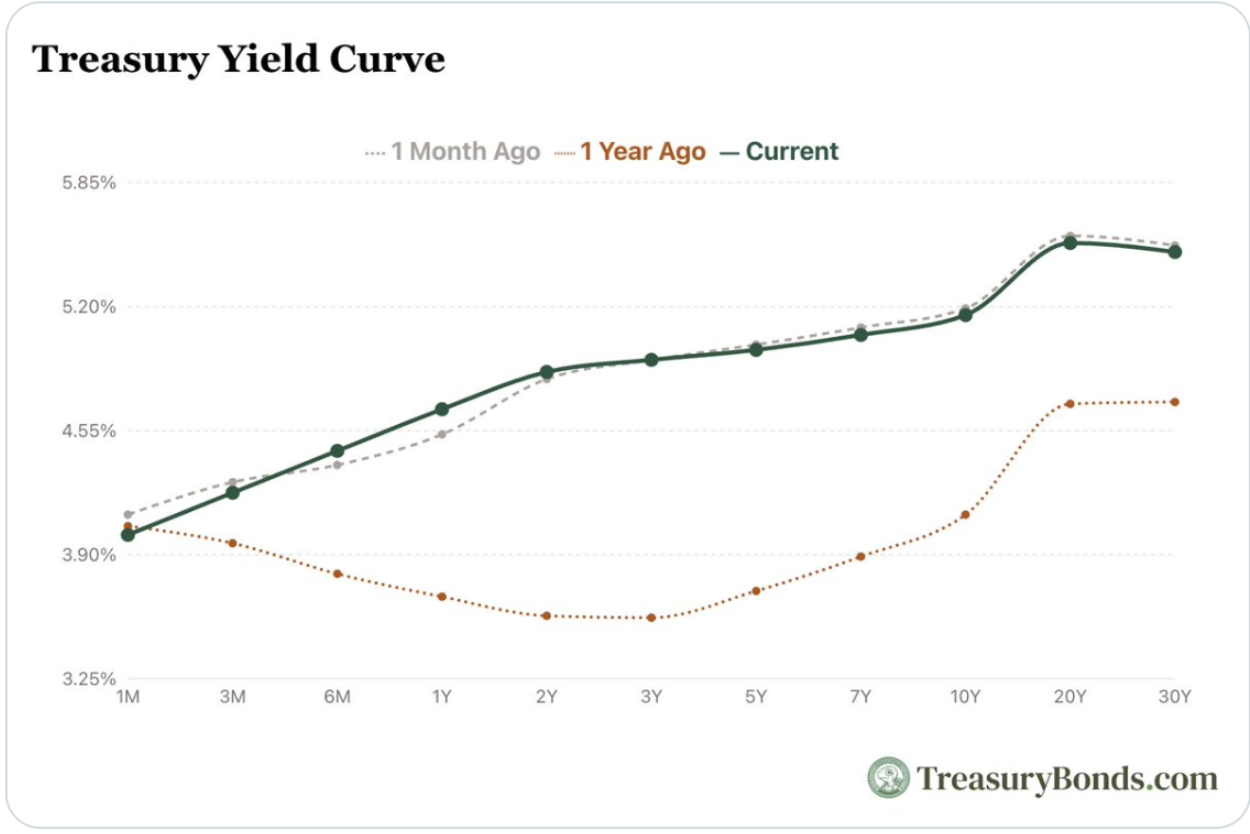
The curve tells the story
A year ago the curve looked very different. It was inverted at the front end, with short-term yields above 2-year and 3-year yields.
Today it slopes upward, with the 2-year at about 4.87% and the 10-year at 5.15%.
That’s roughly 130 basis points higher for the 2-year and about 105 higher for the 10-year, so the front end has repriced the most.
Why the Fed matters here
The fed funds rate is 3.75% to 4.00%. Futures markets imply a roughly an 89% chance of a quarter-point hike in December, with another expected in March.
Fed Governor Waller floated the possibility of a 50 basis point hike, but market pricing centers on 25.
The Fed meets Dec. 8 and 9, and the 1-year Treasury yields about 4.68%, which tells you the market expects more hikes over the next year.
Retail sales, the FOMC minutes and the 20-year auction come next week.
Reminder: Spreading maturities means you don’t have to pick the exact top in yields.