
In 2022 stocks and bonds fell together, and it hurt. But one bad year doesn’t tell you what bonds were hired to do.
What bonds protect against
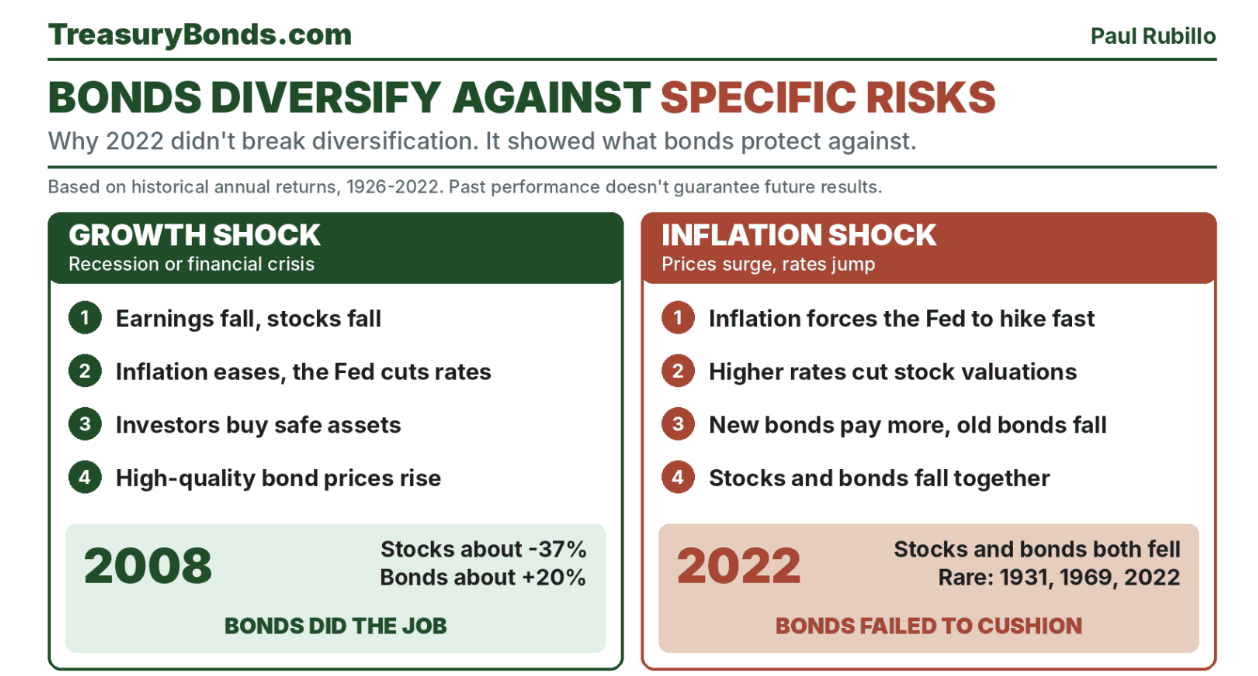
Bonds are best at protecting you from a growth shock.
In a recession, earnings fall and stocks usually follow. Inflation cools and the Fed cuts rates, and investors move toward safety.
High-quality bond prices tend to rise in that setting.
2008 is the textbook case. U.S. stocks lost roughly 37% while bonds gained nearly 20%.
Bonds gave investors something stable to spend from or to rebalance into cheap stocks.
Why 2022 was different
2022 was an inflation shock. Inflation forced the Fed to hike rates at one of the fastest paces in modern history.
Higher rates cut stock valuations, especially for expensive growth companies.
They also hit bonds, because older bonds with low coupons must fall in price to compete with new ones that pay more. Stocks and bonds were reacting to the same problem.
Years when both fell are rare: 1931, 1969 and 2022.
“Bonds” is not one thing
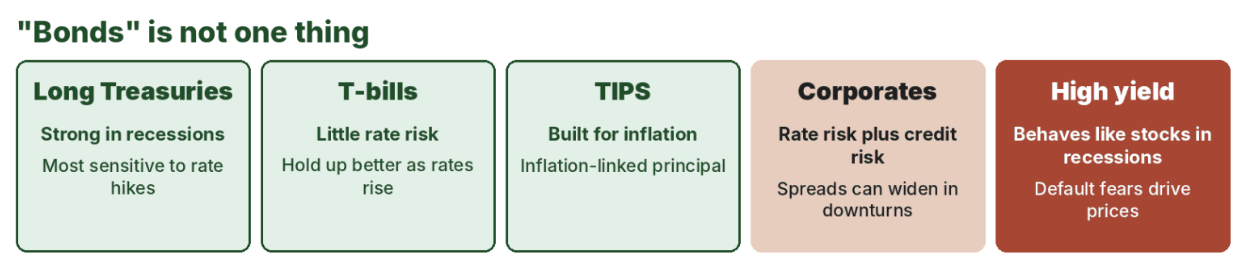
Long Treasuries: They can help a lot in a deflationary recession, but they are the most sensitive to rate hikes.
T-bills: They carry much less interest-rate risk and may hold up better when rates are rising.
TIPS and shorter-duration bonds: They’re built more for inflation worries.
Corporate bonds: They add credit risk to rate risk.
High-yield bonds: They can act more like stocks in a recession because investors worry about defaults.
The fixed income playbook
Recession worry points toward high-quality Treasuries. Inflation worry points toward shorter maturities or TIPS.
The longer the duration, the more a rate shock hurts.
Higher yields after 2022 let a portfolio reinvest income at better rates.
Bottom line
2022 didn’t kill bond diversification. Bonds diversify against recessions and growth scares, and they protect much less against an inflation shock with rapidly rising rates.