
Usually, when traders expect a central bank to raise rates, bond prices fall. Japan is doing the opposite.
Japanese government bonds (JGBs) are rallying even though traders see better than an 80% chance of a Bank of Japan hike by December.
This matters for U.S. bond investors because global yields don’t move in isolation.
Why buyers showed up
Yields near multi-decade highs drew buyers in.
An equity selloff, driven by worries over AI spending, added more demand for safer assets.
Foreign investors were net buyers of Japanese bonds for six straight weeks through Nov. 6, the longest streak since March 2020.
Who is buying, and what they’re buying
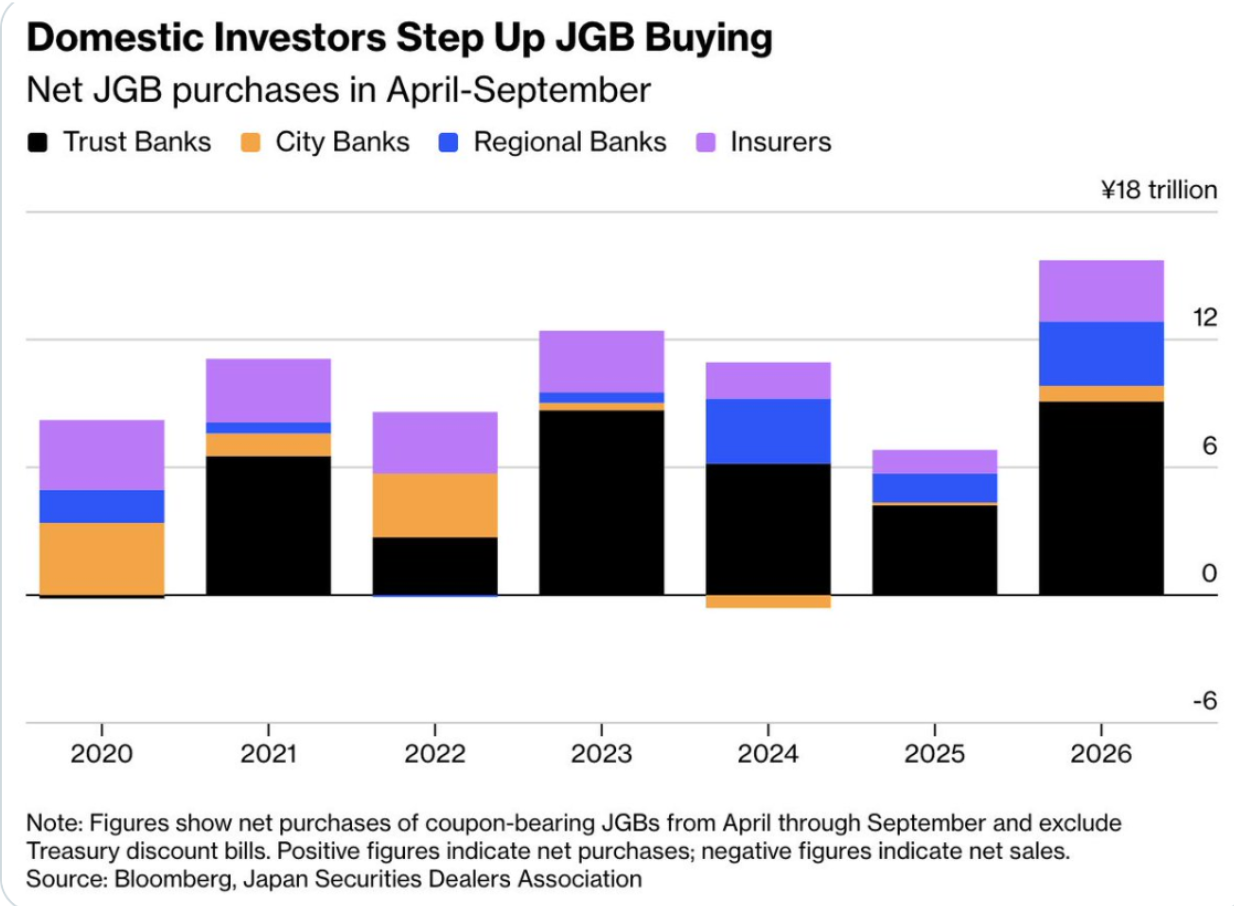
The buying isn’t coming only from abroad.
Japanese banks are gradually adding exposure to 5- to 10-year bonds.
Foreign asset managers are moving into the longest maturities.
The 2026 bar is the tallest of the seven years shown, with trust banks the biggest piece, followed by regional banks and insurers.
Domestic demand is stepping up, not just foreign demand.
The yen is the swing factor
The question to watch is the yen.
If a narrower U.S.-Japan rate gap strengthens the yen, the Bank of Japan could feel less pressure to hike quickly to defend the currency.
That could help steady long-term yields and keep buyers coming in.
A weak yen could force the bank’s hand sooner.
Bottom line
Japan’s bond market is rallying into a likely rate hike because yields are high, stocks are shaky and both domestic and foreign buyers are stepping in. The yen is the variable to watch: a stronger yen could give the Bank of Japan room to move slowly and keep long-term yields steady.