
The 10-year Treasury yield has been above 5% so often this year that it’s starting to feel normal.
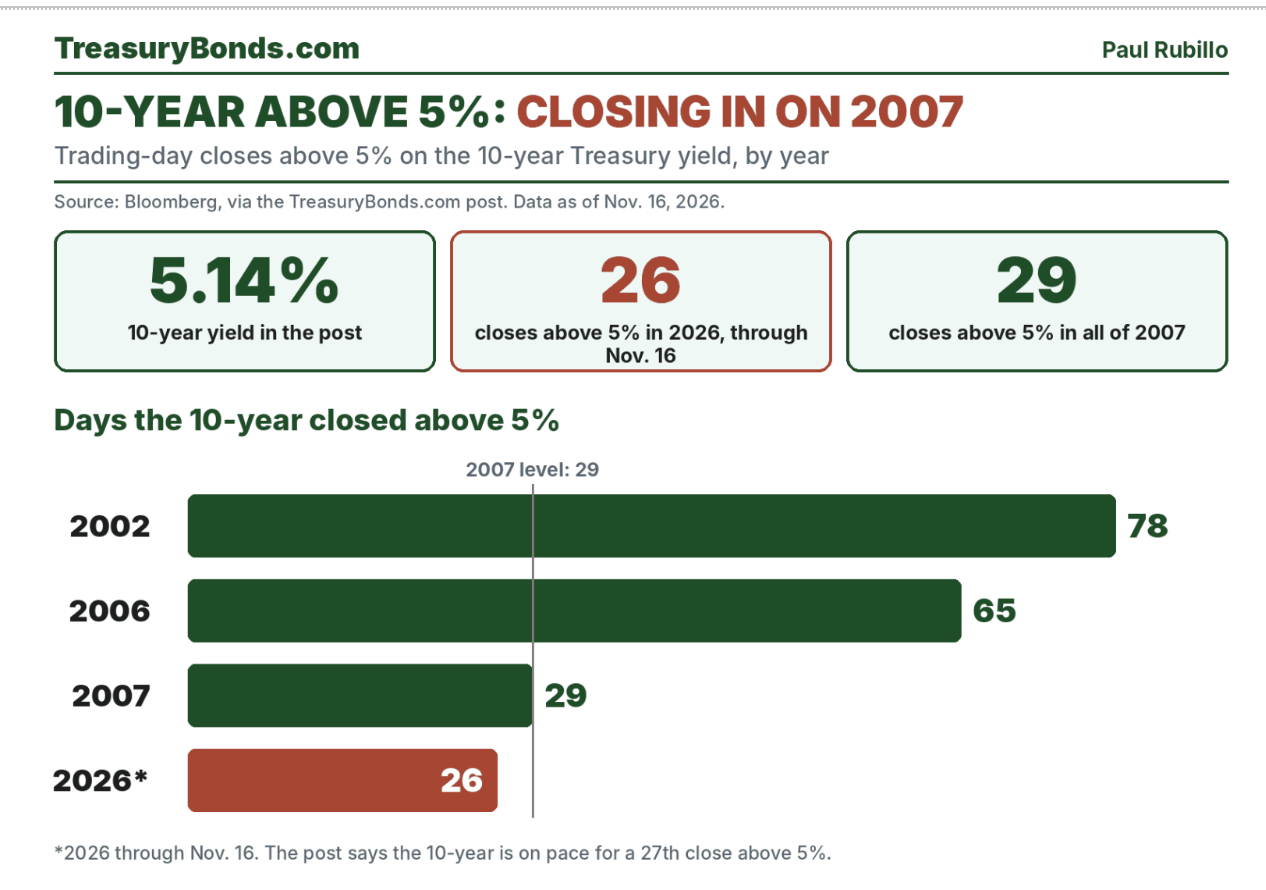
It’s back at 5.14% and on pace for its 27th close above 5% in 2026.
That’s just two shy of the 29 closes above 5% in all of 2007.
How this compares with the past
The 10-year closed above 5% on 78 days in 2002 and 65 days in 2006. In 2007 it happened 29 times.
As of Nov. 16, 2026, the count stands at 26. With about six weeks left in the year, 2026 is within reach of passing 2007.
Why it matters
The 10-year is the benchmark for a lot of borrowing costs, from mortgages to corporate loans.
When it stays above 5%, those rates tend to stay high, too.
For savers and bond buyers, it also means more income.
A 5% yield on a 10-year Treasury was out of reach for most of the last decade and a half.
This week’s data showed prices still rising in October’s import, export and retail sales numbers.
Fitch warned about the U.S. credit outlook, and Cleveland Fed President Hammack reportedly prefers 25-basis-point rate hikes over larger moves.
Yields have had reasons to stay high.
What it means for fixed income investors
Yields can fall quickly if growth weakens, which could lock in today’s levels as a missed opportunity.
Spreading purchases over several weeks or months reduces the risk of buying at one day’s level.
Locking in 5% for 10 years protects you if yields fall, but you give up the chance to buy at higher yields later.