
Fed Vice Chair Philip Jefferson says the massive AI infrastructure buildout is putting upward pressure on inflation by boosting demand across the economy. For bond investors, that’s the part to watch.
Inflation now, productivity later
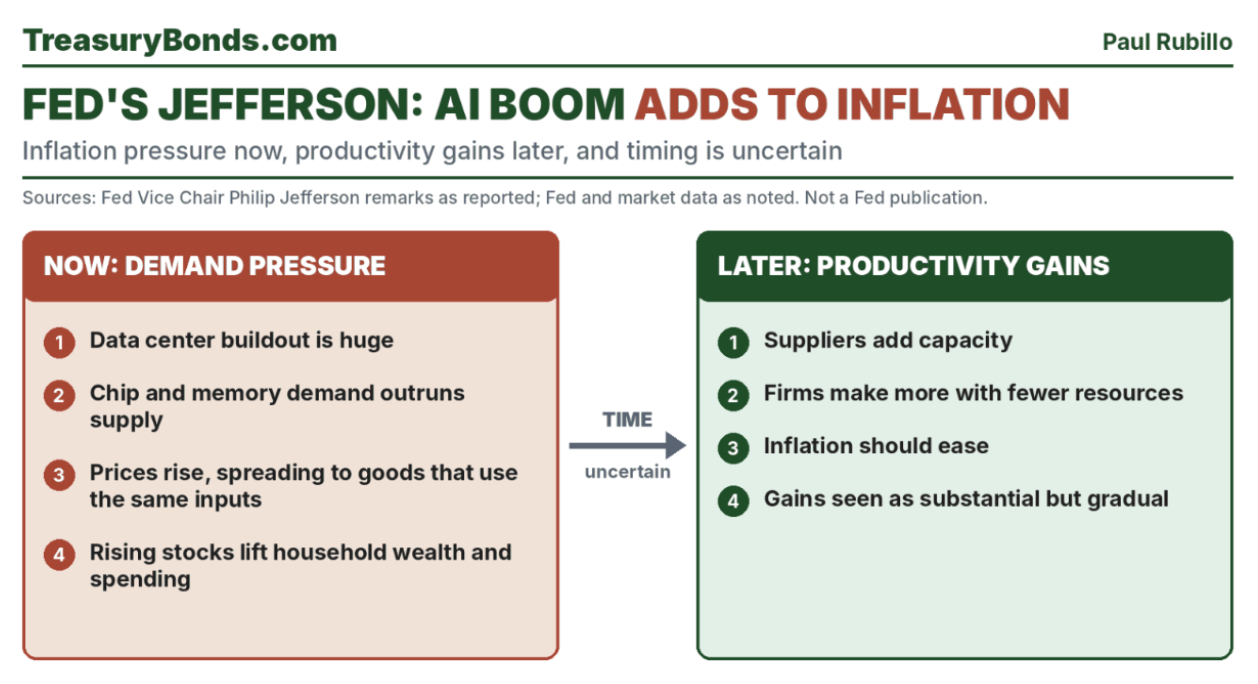
Jefferson described AI as both a demand shock and a supply shock.
Right now, firms are building data centers on a huge scale, and demand for chips and memory is outrunning supply.
Prices for those parts are rising, and the increases can spread to consumer goods that use the same inputs.
Rising stock prices, partly from AI enthusiasm, also lift household wealth and spending.
The offset is productivity. As suppliers add capacity and firms produce more with fewer resources, inflation should ease.
Jefferson’s baseline view is that new technology will lift the economy’s capacity substantially but gradually. The timing and size are uncertain.
He also warned that AI-driven job displacement could strain households, even as new jobs appear, and that energy price shocks pose hard trade-offs.
Why bond investors should care
The Fed’s inflation target is 2%. Core PCE inflation was 3.1% in September, according to one report of the speech.
The 10-year Treasury yield ended Wednesday at 5.07%, and the October Fed minutes showed most policymakers expecting additional tightening.
If AI spending keeps prices firm, yields may stay high longer.