
South Africa's central bank is warning that AI companies' enormous borrowing needs are adding pressure to long-term borrowing costs.
Hyperscalers are raising hundreds of billions of dollars to build data centers, and that demand for capital could make refinancing more expensive for countries that already carry heavy debt loads.
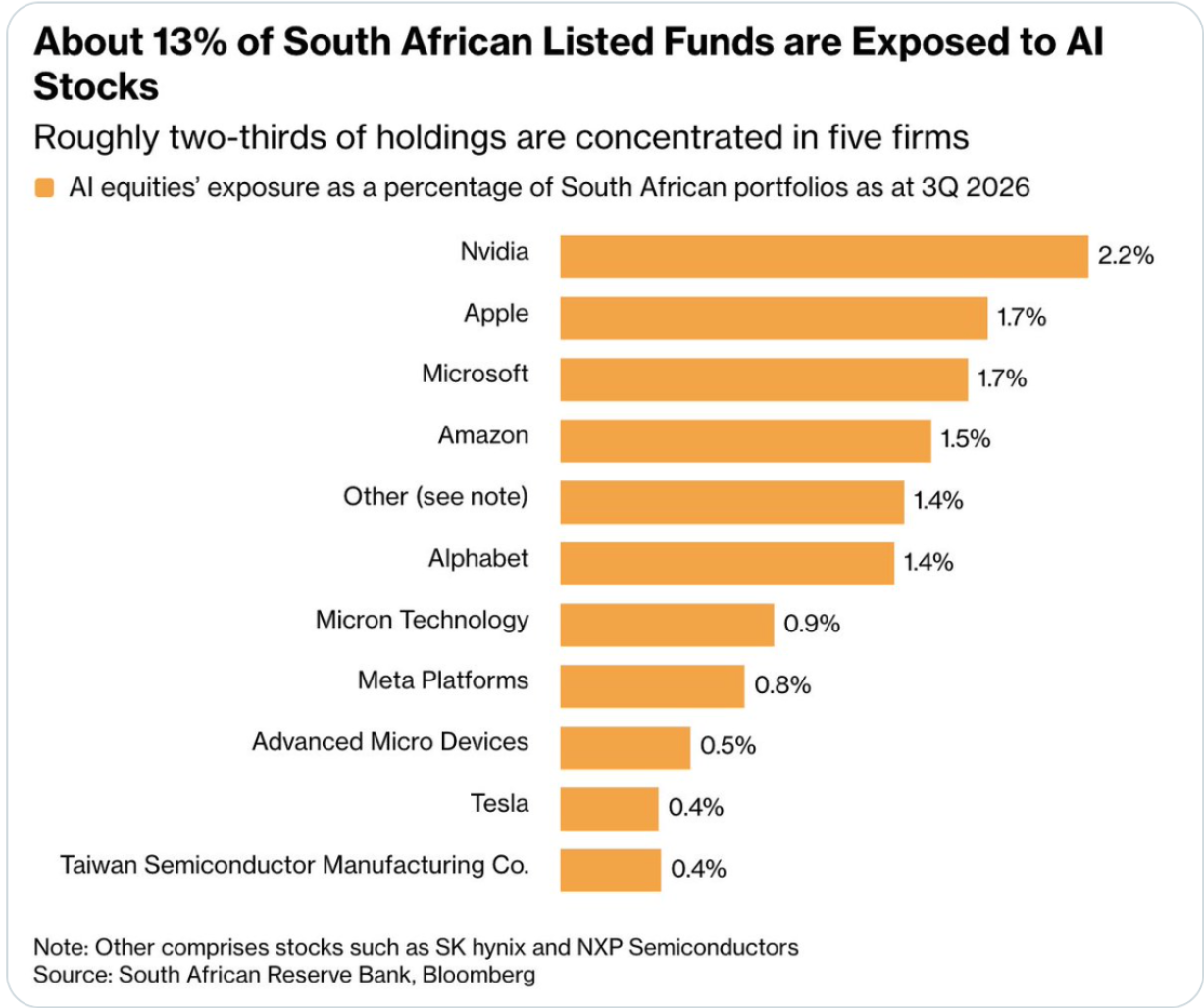
Two pressure points
The first is on the borrowing side. If AI companies keep issuing debt at this pace, they compete with governments for the same pool of investor money, and that could push sovereign funding costs higher.
The second is an equity risk. According to the central bank's analysis, AI-related companies made up almost 13% of assets in the South African investment funds it studied, and more than two-thirds of that exposure sat in just five names: Nvidia, Apple, Microsoft, Amazon and Alphabet.
If AI returns disappoint, a tech sell-off could trigger capital outflows and weaker emerging-market currencies.
Why this matters beyond South Africa
When a handful of companies need huge amounts of capital, the effects can spread to other borrowers, including governments.
And when a large share of fund assets sits in the same few stocks, a drop in those stocks can hit investors in places far from Silicon Valley.
What this could mean for fixed income investors
Heavy corporate borrowing can add to upward pressure on longer-term yields, especially when governments are also issuing a lot of debt.
Emerging-market bonds and currencies can be exposed if a tech sell-off prompts capital to leave.
Long-term bonds carry the most price risk if yields rise, so know your maturities.