
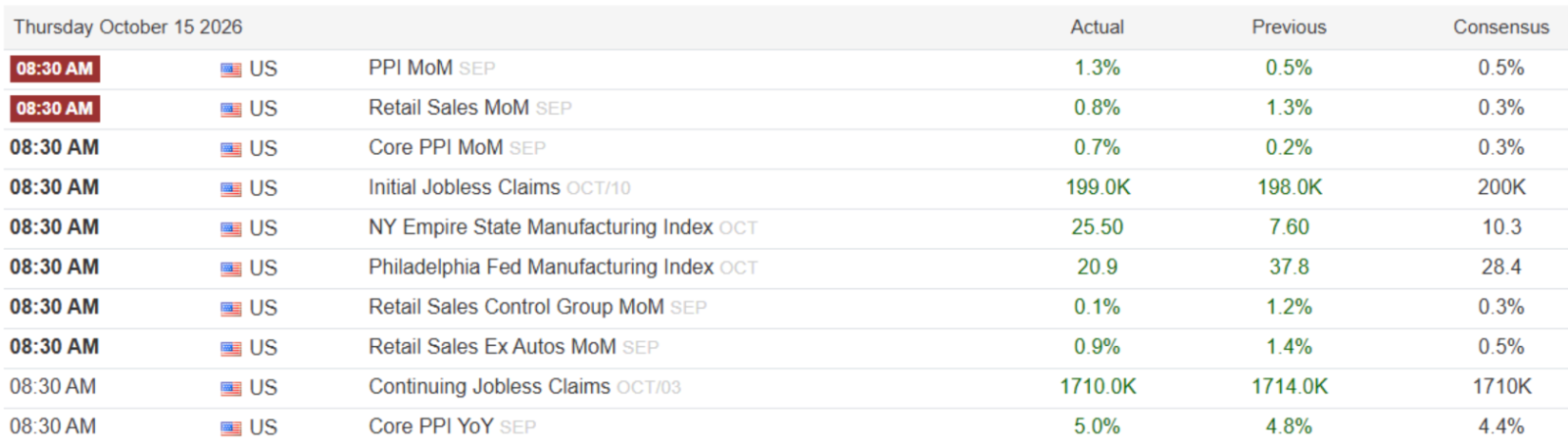
Another strong set of economic data just came over the wires today. What's interesting is bonds are holding firm despite the strong numbers.
Just like we saw yesterday when September CPI came in hot - headline inflation at 3.7% against 3.6% expected, and core up 0.3% for the month against 0.2% expected. Yields on the 30-year Treasury jumped on the news, exactly like you’d expect. By the close, they had given it back and finished lower.
Bad news, yet bonds didn’t sell off. Macro analyst Jim Welsh says that matters more than the news itself. When a market doesn’t respond the way it should to bad news, a trend reversal gets more likely and bonds may be sold out.
What “sold out” means
Think of it as a crowded exit. When yields rise, bond prices fall, and a lot of investors get tired of holding and sell. Eventually, most of the people who wanted out are out. When there are fewer sellers left, even bad news can’t push yields much higher, because nobody is left to sell.
What this could mean for fixed income investors
If you want to add longer maturities, scale in. Buy in pieces over weeks or months, so one bad inflation report doesn’t catch you all at once.
Long bonds cut both ways. On a 30-year bond near 5.5%, a 1 point move in yield is roughly a 14 to 15% move in price.
Shorter maturities already pay about 5%. The 5-year was at 5.00% on October 9. You can earn that without the long-end risk, and with a lot less price swing.
Keep some inflation protection. If the sold-out call is early and inflation stays hot, TIPS and shorter maturities hold up better than long bonds.
Think about where you’d be wrong. If the 30-year yield moves back above the early-October high, the sold-out idea is in trouble.
Bottom line
Bonds ignoring bad news is the kind of thing a market does near a turning point. If you’re a patient investor who wants more income locked in, it’s a reason to start building a position slowly. It isn’t a reason to go all in on the long end.